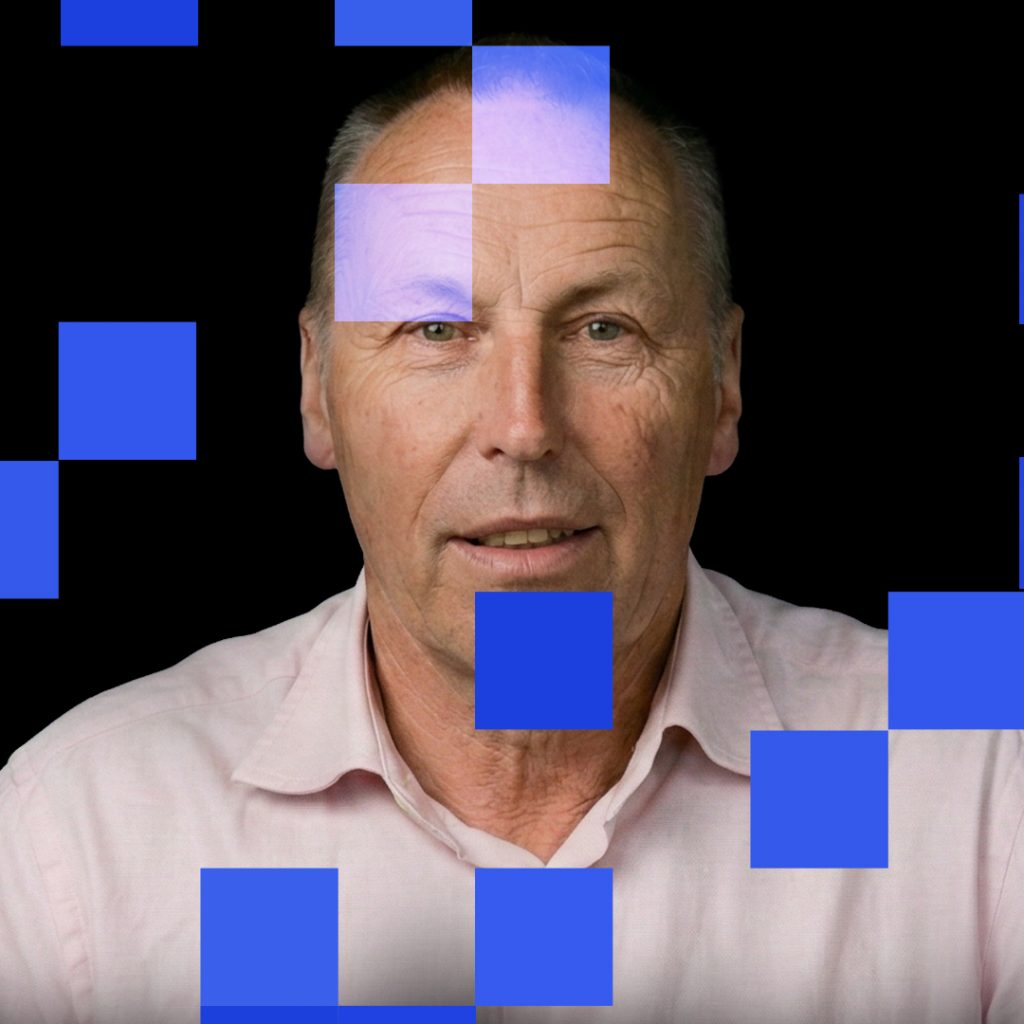
Der Suchende
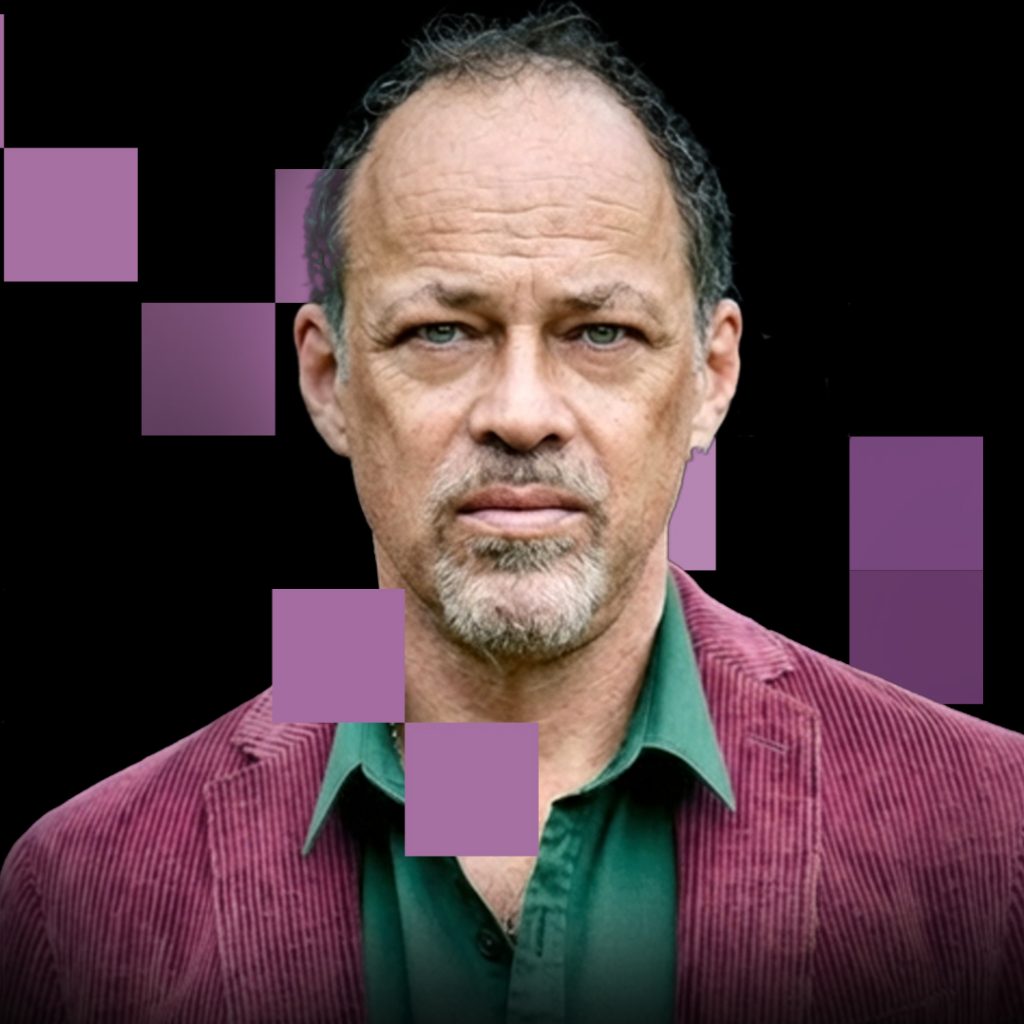
Hugo Ticciati
“I use music as a means to discover who I am and help other people discover who they are.”


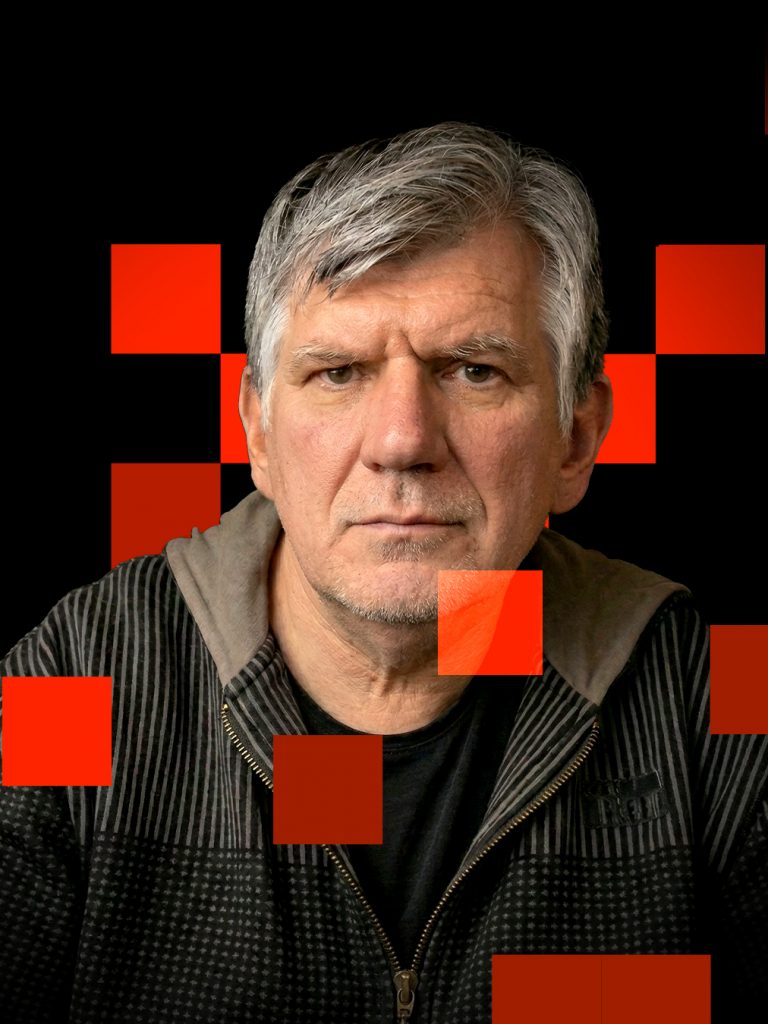
Martina Taubenberger
Seit Anfang 2011 begleitet Martina Taubenberger als selbstständige Kuratorin,
Konzeptentwicklerin und Künstlerische Leiterin Projekte in ganz Deutschland und im
europäischen Ausland. Im „Blended Art Podcast“ präsentiert Martina Taubenberger Künstler:innen und Projekte, die den Kunstbegriff repräsentieren und reflektiert aus dem Blickwinkel der „blended art“ in unterschiedlichen Formaten über Begrifflichkeiten aus Kunst, Kultur und Gesellschaft.
Hugo Ticciati
Hugo Ticciati ist ein britisch – schwedischer Geiger, Dirigent, Kurator, Music Educator und Festivalleiter. Er ist Gründer und künstlerische Leiter des O/Modernt Kammerorchester und seines eigenen Festivals O/Modernt in Stockholm und Deputy Artistic Director der Lilla Akademien Stockholm.
Für mich ist Ticciati einer der inspirierendsten und faszinierendsten Künstlerpersönlichkeiten, die ich kenne. Am Rande der Produktion „Babel – A Ballet of Signs“ sprachen wir über seinen ganz persönlichen Weg und Musik als Berufung, über die Bedeutung von Spiritualität, Hingabe, Vertrauen und Leidenschaft; wir diskutierten über die Bedeutung des Lernens im Lehren, die widersprüchlichen emotionalen und intellektuellen Zugänge zu zeitgenössischer Musik, das Musikhören als indviduelle Haltung und über Musik als philosophische Sprache.
Martina Taubenberger: Blended art is my concept of a hybrid art that does not need genres to define itself. My name is Martina Taubenberger and in the blended art space I’m talking to artists who embody that concept for me.
All right. Welcome, everybody, to the Blended Art Space. And my guest today is Hugo Ticciati. Hello. Thanks for doing this.
Hugo Ticciati: It’s a pleasure.
MT: Usually I do these conversations in my apartment at midnight over a glass of wine. That’s what I told everybody. But today it’s different because we’re in the middle of a production. So actually we’re sitting on a hotel bed, really comfortably, and I am drinking instant coffee that happened to be here in the room from a paper cup. And Hugo fortunately managed to snitch a cup somewhere. What are you drinking today?
HT: Some herbal tea.
MT: Some herbal tea, wonderful. Okay, so this is not wine. It’s not midnight either. It’s actually high noon, but I think we can deal with it.
So Hugo, before we go into introducing you – you are a violinist, conductor, based in Sweden, but originally from Great Britain. The first question I ask all my guests is: where do we actually know each other from? And I find it very curious what the other guests remember of our first encounter. So do you remember our first…?
HT: Yes, it was, we were in Berlin. Yes. And you moderated a concert we were doing at the Young Euro Classics, where we were combining Metallica and Vivaldi with a wonderful bassoon player, Bram van Sambeek, my orchestra, O/Modernt. And you did a fantastic moderation to a small little audience and we just – there was a spark straight away. And obviously our wavelengths and how we thought about music and art and culture are very much aligned. And I think that was, yeah, that was our first meeting.
MT: Yeah, exactly. And for me this also was a funny story because I remember I was asked to do this concert moderation – like a concert talk with the artists – for a program that was called „Vivaldi Rocks.“
HT: Oh, I see.
MT: Yeah, exactly. You were not too keen to begin with.
HT: And I was like, „Oh my God, I don’t want to do ‚Vivaldi Rocks.'“ It’s been done. And then I went to see the dress rehearsal because that’s always what I do when I prepare. And I was totally blown away because it was so vital and you combined rock ballads with Vivaldi pieces – especially, I remember, the Four Seasons, I had never heard played like that. And it really made the Vivaldi rock and swing in a way that I had never heard before. So that was amazing. And then I really thought – there you go with your prejudices. And then we had this wonderful concert talk and I knew: I’m not going to let you out of my professional life ever again.
Yeah, so that’s our story. And why don’t you tell us a little bit about yourself? I kind of like looking at people’s CVs, like the biographies they put up on their websites, and see what terms they put on top. And in your case it says violinist, leader, and conductor. That strikes me as unusual for an artist – to put the term „leader“ on top of the biography. Tell us a little bit about how you describe yourself, or who you are maybe.
MT: Who you are is a question that you can’t answer. Oh dear, that’s a rather big one.
So I think, for me, to define myself by what I do is already, in a sense, doesn’t get to the heart of the question. So by calling myself a violinist or leader or conductor – when I read that I think, okay, but actually that’s nothing to do with who I am, it’s what I do. And I think if I look more to the core of who I am, my answer would be more that it’s a process of discovery. I have no idea who I am really, and that’s why we’re here, and that’s why I play the violin. That’s why I use music as a means to, in a way, discover who I am and help other people discover who they are.
So for me, the whole process of music making and the whole philosophy and ideas behind O/Modernt – which we can talk about later – is a process of awakening to who I really am. To answer the question: it’s a process, it’s a working process.
Yeah, I think – and of course violinist, leader, conductor, that’s just what I happen to be doing at the moment, but that’s not who I am. That’s just a passing phenomena.
HT: Maybe we can get more into this question by talking about how you actually became a musician. Because your way into what you’re doing now – you told me about this last time we met – is not the typical mainstream career path. You chose a different path. So maybe you want to tell us a little bit about that. How do you actually end up doing what you’re doing?
MT: Okay, I have a very brief history of my life that maybe will help. So I started playing the violin and piano at an early age, six, seven. Parents were not professional musicians – very much in the musical world. My brother and sister both were playing as well, so there was always music with us. And there was just a sort of natural feeling: „Ah yes, I play the violin, this is what I want to do.“ It was never a great sort of moment of decision, it was just always there.
And then, um, 16, 17, things just weren’t progressing in a way that they needed to – purely on a violinistic level – for me to do what I wanted to do with the violin. I felt frustrated. So I thought, okay, that’s fine. I’ll move and go into the more sort of academic part of music and musicology. And I got a place at Cambridge to study musicology, where of course one plays, but that’s not the focus.
HT: I didn’t even know that. You studied musicology?
MT: No, no, I hadn’t. This is what happens. I got a place, and then – I was meant to be going – and a Spanish violinist heard me play, José de Gracia, who led, I think at the time, the English Chamber Orchestra. And he said, „Hugo, you’ve got to play. There’s something you need to say through the violin.“ And I sort of spontaneously said, „Okay, but where, how?“ He said, „There’s a guy in Canada. Go there and study with him.“
And so I phoned Cambridge and said, „Can I come next year? Can I have a year off and just go to Canada?“
HT: What did your parents say about that?
MT: Um, they were… Isn’t that something that freaks parents out?
HT: Yeah.
MT: The freaking part comes a bit later. In the moment it was all okay, because it was only postponing by a year. And then so I went off – literally with a violin and my rucksack, no place to live – and went off to Canada to study with this guy. And that’s another chapter in the story. But basically, at the end of eight years – I was practicing day and night, but in the wrong way – and I had such pain. I couldn’t… I had pain.
HT: With that guy in Canada?
MT: Yeah. And no fault of his, but simply I was not in a position – I needed to start from scratch and really set up my whole playing. So I ended up at the end of the year, oh, eight months without being able to play at all, having just overpracticed in the wrong way, being tense.
But at the same time it was a very formative period. There were a lot of things I was reading and I started meditating.
HT: And at an early age already you started meditating? Yes, when I was about 19. Who brought you there?
MT: I came from a sort of Christian evangelical tradition, but then started reading the mystics and fell in love with the mystical literature, the Christian literature. Which then – I met a nun who, just out of the… I went into a bookstore and she came over and said, „I think I know the book for you.“ And she had no idea who I was. And I walked in and she gave me a book and it was just meditating morning and evening. And then that obviously opened me up and led to my exploration of yoga literature, of Zen literature, and all of those practices and the whole healing path.
HT: But again, I think we’re jumping ahead a little.
MT: No, that’s okay though.
HT: I was just curious because at such an early age, usually meditation is something you pick up later. But okay, go on, go on. I interrupted your story.
MT: But back in Canada – so I came back thinking, okay, I’ll go to Cambridge, that’s fine, and do my stuff. Then again it was a late evening, I had a call from a very close friend, my music history teacher. He said, „There’s a wonderful Russian violinist who you must meet, who lives in Sweden and teaches there.“ So I went over and I played – a bit of the Bach Double I think with her husband. Not ‚I think‘ – I did play the Bach Double with her husband, a wonderful viola player.
And straight away, after about – she came and just said a few, she couldn’t speak any English so she spoke Russian, or didn’t really say anything, but just sort of touched some places of my body saying, „Yeah, what are you feeling here?“ But sort of intuitively I knew: this is the person I need to sort out my playing. It was just within five minutes it was clear.
And so the next day I phoned Cambridge and said I’m not coming.
HT: What did your parents say?
MT: Then my mum freaked out a little, but very quickly understood that it was a decision made out of a sort of sense of real trust and truth, as it were. My dad was over the moon. He just loved me paving my own path.
HT: That is precious – and having parents who support you in that.
MT: They’re always very supportive. Obviously with their initial hiccup. But then I bought a single-way flight to Sweden. And both Nina and Oleg – her late husband – I stayed with them.
HT: So that was Nina…?
MT: Balabina.
HT: Balabina. Yes, a violinist from St. Petersburg.
MT: And I basically for the next four or five years became a total hermit. I didn’t leave the house, I just practiced.
HT: And you lived with that family?
MT: I lived with them, yes. And we’d get up at five in the morning.
HT: That is quite a commitment for a teacher also.
MT: And it sounds – in Russia it’s actually quite common for students to live with their teachers. But of course it’s an incredible commitment and in the West it’s really not something one hears of. But she again had a total trust – that I had something to express.
HT: Do you know what she discovered in you like that? Did she ever say?
MT: She just straightaway felt there’s an incredible passion and want to express, but can’t – because I’m limited by what I can do on the violin. And she thought, „That’s the bit I can help you with.“ So yeah, we sort of… our souls and spirits…
HT: You know, that is so incredible. Because when you think of how this whole music education world, this music academia world, is so much about practicing, practicing, practicing, auditioning, not getting in, not getting in, being frustrated and just quitting. Thinking about how many more artists might be out there who would just profit from somebody looking closer, somebody feeling that. And I think there’s just a total sort of love and trust: okay, this is – I dedicate this to you so that you can express.
And then, so the regime was: you got up at five in the morning…
MT: Worked for two hours with her, and then she went off to school to work for 12 hours. I would then practice, have the luxury of sleeping after lunch, and then she would come back late evening – 10, 10:30 – but in for a couple of hours.
So I had this intense – super intense – time just practicing and working. And also it was like a tabula rasa, not only violinistically, because we went back to open strings for months, scales, studies. I didn’t play a piece for four years. But it was also spiritually a time of letting go of everything and releasing lots of my belief structures, as it were, and just opening up.
And that’s where meditating played such a critical role. Both the violinistic, but also obviously the releasing of all that violinistic conditioning and emotional conditioning – it was beautiful how they occurred together in the process. And I really felt as I was practicing these scales, I was also cleaning my soul. And so that’s where the journey with Nina with the violin, and particularly deepening in meditation – that’s where it all sort of took shape.
HT: Wow. That is such a unique story. So you actually never attended musical college in the traditional way.
MT: No.
HT: Was it ever something that was discussed? I mean, it could also be that she helps you prepare to get into college. Was this ever a topic or not at all?
MT: No. Well, the paradox was very quickly – she’d founded a fantastic school in Sweden, Lilla Akademien, which is a sort of combination of education plus music, whereas music is the beating heart of all the education. And it’s aged five to 19, 20, 21, with the pre-college. And I ended up – again with Mark Tatlo, my music history teacher, who had introduced me to Nina – one day he said, „Oh Hugo, tomorrow I’m meant to be giving a lecture on the early symphony to the history class.“ It was the gymnasium, they were I think 17, 18. And I said, „Okay, but I don’t know much about the early symphony, I’ll do my best.“
Anyway, throughout the night I read all I could. I had some books, came along and started just listening to some early symphonies, analyzing them, talking about them, talking about the history. And I suddenly thought: this is such good fun. And they were having a laugh. And then they said, „Oh Hugo, can you teach us for the year?“ And so I ended up teaching a music history course to a gymnasium.
And basically then I had to sort of learn in the process of teaching, because obviously there were so many things, most things I had no idea about. So this incredibly intense combination of learning and reading all week and practicing, and then coming in and talking. And I said to them, „Look, we’re doing this together. I can prepare everything.“ And so I would be writing an enormous amount, summarizing things.
And that, I think, is that whole in-depth learning, teaching, learning, teaching. It meant I could really teach what I was passionate about. So I could choose composers who I wanted to dive into myself and explore and listen to all their music. And I ended up looking at a lot of medieval and Renaissance music, which is a little unusual for a violinist, but I just totally loved it. And so I would be looking at Josquin, William Byrd, and Tallis with them. And that is then obviously enriches one’s whole musical world.
So that was, in a way – I didn’t have any sort of formal paper education, but I had this incredibly intense self-education, basically choosing what I wanted. And then it transpired – they said, „Oh, should we do some harmony together?“ And I started teaching harmony. And I thought, „Would you guys like to know a bit about Schenker?“ And I said, „Okay, give me a month.“ And of course they were just eager and curious. And so I basically just thought: what would I love to know more about? I can teach, great, I can teach.
HT: You know what, this is almost like a story from another time and another world. Like you would not believe that this is possible in these times – that you can have this kind of education and this turning from a student into a teacher. It’s like in the Greek times, when there was this very close teacher-student relationship and that just evolved into something new. That’s really amazing. That’s really like out of a movie. One should make a movie out of it.
But tell me something – when you have this special kind of education, when is the moment, or how do you know the moment to say: „Now it’s enough. Now I leave that place and move on. Now it’s the time to start giving concerts“? I know you will probably say you’re never ready, you’re never done with studying, but was there a point where you both decided: now it’s time to…?
MT: I think things sort of evolved. It’s difficult to say, in the sense that it felt like: „Aha, it’s time to perform a little. Let’s let some go out and see how that works, see how that feels.“ And of course it’s suddenly a surreal experience not having been performing at all and suddenly standing in front of an audience again.
HT: Tell me something, because this is interesting. You said that you turned into this kind of… what’s the word?
MT: Hermit-like, yes.
HT: Hermit. Particularly inspired by all the literature you were reading – the monastic traditions, the monks and the Indians. So you’re totally not in the world. And then the next step is to go out there and be on stage. And now watching you and listening to you perform – I have to say, everybody out there who hasn’t seen you should really try to check it out because you have such a presence, such a physical presence on stage and such an energy that one thinks: this guy was born on stage and has been performing ever since.
So coming out of this hermit state and then going on stage – how did that go? And where does the stage presence that you have come from, and the security that you have on stage?
MT: I think it’s a double process. One is – I think the truer one is to oneself, the more authentic one is, the more one doesn’t think about stage presence, one just is oneself. And the more one can release that need to appear as something, the stronger truth comes through, as it were. Sorry, ‚truth‘ is a big word, but I think you know the sense of – you know when there’s an artist you feel they’re real. And you know when an artist is putting on an act. You can sense that almost immediately.
And I think one of the things that the process I went through – and I would attribute a lot to meditating and the sort of teaching Nina gave me – was that, in a way, the more, it’s the great paradox, the more you empty yourself of ego, of the need to impress, the need for people to like you, whatever it is – the more a sort of natural presence arises and the stronger that becomes. And it’s still a big work in process, we’re all keep on working on ourselves.
But was it there right from the beginning? I think so – but I also think it’s natural to say that I did always like being on stage. And the three of us – it was me, my brother and my sister – she was by far the most diligent practicer. She would be up in the morning at six o’clock practicing. And me and my brother were a nightmare. But as soon as I got on stage with the violin, everything went much better than any of my practice. And there was just suddenly a sense: „Oh yeah, this is what it’s meant to be like.“
And it was always a bit unfair, because my sister became so prepared, and then everything in the concert didn’t go quite as well as she knew she could. And everything for me – it never went so well in practice. And then suddenly on stage…