Der Meister des Bizarren
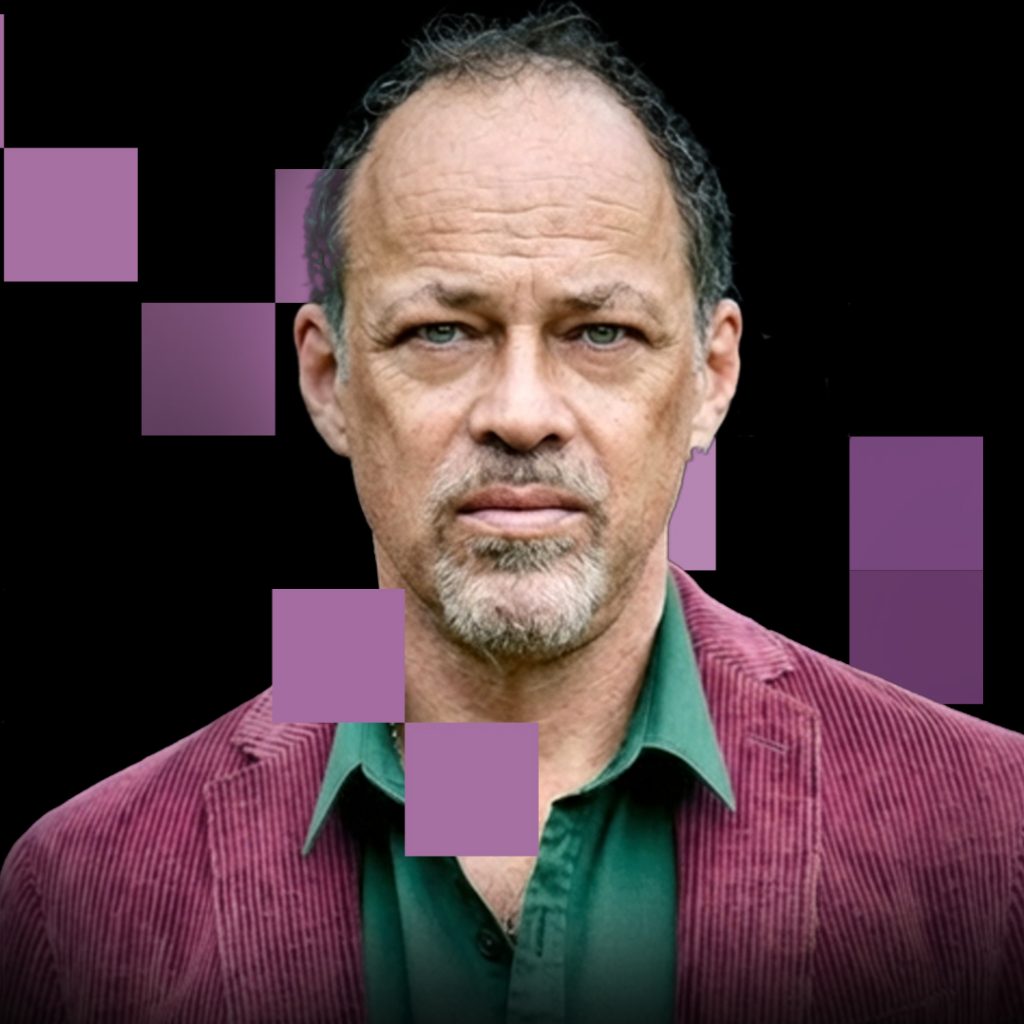
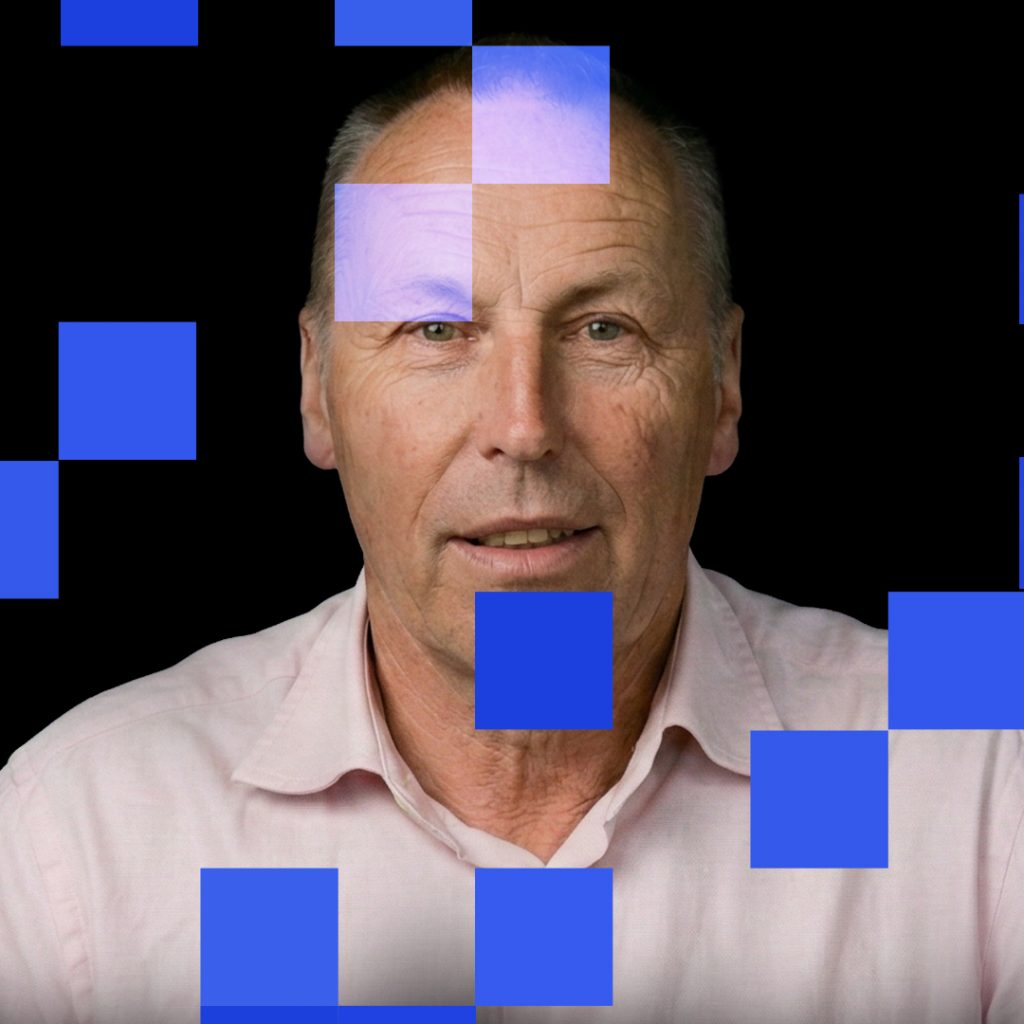
Django Bates
“I was very clear about a lot of things, even about chaos, I chose where that would happen and how it would end...”


Martina Taubenberger
Seit Anfang 2011 begleitet Martina Taubenberger als selbstständige Kuratorin, Konzeptentwicklerin und Künstlerische Leiterin Projekte in ganz Deutschland und im europäischen Ausland. Im „Blended Art Podcast“ präsentiert Martina Taubenberger Künstler:innen und Projekte, die den Kunstbegriff repräsentieren und reflektiert aus dem Blickwinkel der „blended art“ in unterschiedlichen Formaten über Begrifflichkeiten aus Kunst, Kultur und Gesellschaft.
Django Bates
Der britische Multiinstrumentalist Django Bates ist bekannt für seine messerscharfen Witz als Spieler, Komponist und Arrangeur. Bates ist einer der Architekten der britischen Jazz – Renaissance, die Ende der 80er Jahre ernsthaft begann.
Am Rande unserer Produktion „Babel – A Ballet of Signs“ führten wir ein Gespräch über Freiheit und Kontrolle, Perfektion und Risiko und den Unterschied zwischen Komposition, Interpretation und Improvisation; über die Bedeutung von Entscheidungen im kreativen Prozess und den Wert vielfältiger Einflüsse und Freiräume in der künstlerischen Entwicklung. Und darüber, wie man Improvisation und Komposition eigentlich unterrichtet.
Martina Taubenberger: Blended art is my concept of a hybrid art that does not need genres to define itself. My name is Martina Taubenberger and in the blended art space I’m talking to artists who embody that concept for me.
So welcome everybody to this next issue of my Blended Art Space. And the blended artist that I’m presenting today is Django Bates. Welcome, Django, and thanks for doing this.
Django Bates: It’s nice to be here. Thank you.
MT: What I always – the first question I always ask before we even get into who you actually are, although I think most people know who you are in this case – is the question: Do you remember how we first met? Do you actually remember our first encounter?
DB: Well, I think it was where I played with the trio and we played some of my arrangements of Charlie Parker music. And – is this correct before I carry on? Is this the correct occasion?
MT: Oh, it doesn’t matter. Correct or not.
DB: I sent some scores of a few of the pieces and you’d chosen which ones you thought would work for your special project. And I turned up not really knowing what we were doing, but just pretty open-minded about what it should be. And then we found ourselves on stage with the screens being projected behind us, and you with a red arrow pointer, and it was all very precise and very engaging. And there was an audience there who didn’t know much about jazz, who were being kind of welcomed into the world, and things were being explained about improvisation and comparisons between older jazz saxophonists and then the new Charlie Parker, who turned up and blew everyone’s mind. And comparisons between that and what we were doing with his music.
And yeah, I must say it was a very good way for you to introduce yourself to us because the preparation was exemplary and the vibe was great. And the audience came up afterwards and said, „Well, I didn’t expect to enjoy this at all.“ It was wonderful.
MT: Seriously?
DB: You know, ‚cause they’re being told that they’re going to have something explained to them and it’s maybe unfamiliar territory. And by the end of it they said, „I was enlightened in some way. I understood more about the process and that made me able to appreciate what you’re actually doing here on stage as a trio.“
And of course you could walk away from something like that and think, „Wow, if you’d never do that? How do you communicate to an audience who doesn’t understand it already? How do you reach out to people?“ And people like me who are involved in doing those arrangements and rehearsing them and trying to perform them around the place don’t really have the time and energy to put into what’s always been called outreach. And we just kind of reap the benefits of it when it’s done by someone else like you. And yeah, I’m really – when I find myself in that situation, I’m really glad about it. And I have to admit that without it, I think this whole business is not really sustainable. Why would people leave home or get consumed by something which is easier to access at home?
MT: It’s nice that you say that, because I think – I mean, these outreach projects and music education projects are actually more common even in classical music these days. But there are so many people out there who have no idea how improvisation actually works. And I’m the same. I come from that place, you know.
So maybe I go a step back – how I remember how we first met. Because the way I first met you, you didn’t meet me, obviously, because I was in the audience. It was the Berlin Jazz Fest, and you played Beloved, which is this Charlie Parker program. And at that time I already had this concert talk series by the Körber Stiftung in Hamburg – „Zweimal hören“ – that was originally designed to present music of the 20th century and contemporary composers. And I think I was the first to introduce jazz to that format.
And I was so absolutely exhilarated and I was so into that concert because I knew Charlie Parker and I had studied Charlie Parker – because I’m a musicologist with that kind of focus. And I could recognize the Parker but it was still something completely different. And I was there with a friend and she was not excited at all. Because she just said, „It’s a good jazz concert, but what are you so excited about?“
DB: The references.
MT: Yes, the way he’s working with Charlie Parker and totally making it a new thing. And then I realized: okay, that’s something that we just take as a given, or we take for granted, that everybody knows these tunes and knows who Charlie Parker is. And it’s not at all. And so I thought: I want to do „Zweimal hören“ with that guy.
And this is why I actually don’t really remember… You’re one of the few people where I don’t really know where we actually met for the first time, because it felt like I was chasing you a little bit through your various management. And I think I came to a master class in Berlin that you gave at the university.
DB: Oh yes, I remember that. A very big room.
MT: Yes, and again, that was so inspiring. I still have the notes that I took from that master class – because I’m not even composing, but just from the way you described how you compose, I felt like I want to start composing tomorrow. And that really happens really rarely to me, because I’m really not composing. So that is how I remember it.
DB: That makes sense that you were at that master class, which I remember enjoying a lot. And yeah, that would have fed into this way of being able to explain what we’re doing so clearly – which was surprising, because I thought we’d never met. And there you were explaining what we do to an audience, with the red pointer.
MT: You thought you met me first on stage. That’s funny.
DB: Yes, yeah. I was also very impressed by this red pointer light thing. Preparation, pointing out where a phrase has been kind of transformed rhythmically and then used as a baseline and all of these exciting things. And yes, you’re right, it is a secret language, and the references are known to a few people and they enjoy that secrecy in a way. So there’s this conflict sometimes.
I mean, we love talking about – we were just upstairs just now talking about the fact that Charlie Parker was tuned slightly sharp of the rest of the band and why string players sometimes do that to bring them out from the orchestra. And yeah, to be able to share all of that detail and try and get more people interested – it’s a very big job and it’s very important.
MT: I remember I always somehow wanted to learn how to improvise. Like I play the clarinet and the saxophone – not professionally or anything, but as a teenager I wanted to learn how to improvise. And my teacher back then kind of made it seem to me like: either you know how to do it or you don’t. So just listen and do it. And I was like, this can’t be the answer.
DB: It’s just a total misunderstanding of the truth. Either you have the talent or you don’t.
MT: And so then I went to the United States to study and I somehow ended up in a band there because I asked whether I can take classes and they said yes, sure. And I was lucky because there was one scale I knew and that was the B flat blues scale.
DB: Useful.
MT: Yes, very useful. And as it were, I had to improvise on a B flat blues in this little small audition – just trying to figure out who they could put in which band workshop. And so I managed somehow to get into that band workshop. And then I was in Chicago at the Roosevelt University Musical College in a band workshop. And it was a total mystery to me how everybody always knew when to start from the beginning again. I had no idea how they actually did that. It’s like, is there a secret sign language?
DB: No, it’s just that we got to the end, then we go back to the beginning.
MT: Yes, I know. It’s like – but how do they all know? Why do they all start at the same time? Always at the beginning.
DB: This reminds me how lucky I was that from the age of about 11, I started searching out where I could play this music with other people. And I went on a jazz summer school, which was full of real jazz players from all different fields – improvisers like John Stevens, Kenny Wheeler was playing in a big band for that at one time. In fact he took me aside and explained – he just said, „Yeah, when it came to this place here, why did you not play anything?“ Because I was playing second trumpet in the band. And I said, „Well, it’s just slash, slash, slash, and then a weird kind of symbol and a letter. I’ve got no idea what it is.“ And he said, „Look, come to the piano.“
And he was the most shy, humble man in the world, who’s famous for this, but he took the time out, took me to the piano and said, „Look, if it’s F major 7, so the major 7th is this… okay, that’s that note. Sharp 11 would be this note, then you fill in all the notes between – then it’s just the white notes. You just play all the white notes. And then later on you can find ways to get between those notes, but to start with, that’s what it is.“
MT: Oh wow.
DB: And you improvise with those notes. And it was as clear as that. It took him five minutes to explain it in this very kind of beginning way.
And then after that summer school, wishing to continue investigating this, a friend that I met there – we were the only young people there, so we kind of bumped into each other at the train station and said, „Hey, let’s carry on this work together.“ And he found an evening class for adult education and it was in this really run-down school near Brixton in London. And at the same time as us in our jazz evening class, there was a wrestling class. So when we took a coffee break and went downstairs, there’d be big men with bloody noses, blood everywhere. And we’d go back to our room and this very patient man called Roger Corkwell…
MT: So that explains a lot now.
DB: Yeah, no, no, that didn’t influence me at all. (lacht) And then this guy, Roger Corkwell, who was an influence – he was like a very gentle hippie guy and he would write new tunes every week, and they would just be like eight or nine or ten bars long or something and they would explore a couple of different chords. It could be really quite random stuff he wrote. So it’d be B flat maj7 sharp 11… something D13 sus4 – slightly random but with a nice melody.
And then we’d all play it and it would sound like hell because some of the people there owned a saxophone but only knew half of the notes even to play. And then there’d be people in the rhythm section who were semi-pro and got to show how much they knew, very show-off. And then there’d be me and my friend, and we’d go around the circle, everyone would have one chorus of solo, and as it went around you’d think about what people were doing. When it came to you, you’d try the good bits and try and add some other bits. And we just did that every Thursday night for a year or more.
MT: Without much explanation, you just dove into it.
DB: This is the chord, this is the mode, see what you can do.
MT: Well, that’s a beautiful way of…
DB: Yeah, it was just like a ritual in a way. And of course alongside that was all of the other stuff like growing up in a house full of music. And this friend of mine, also his house was full of jazz music, his father loves jazz. So we used to meet at his place on a Sunday – which is our day off from school – and take his father’s Charlie Parker 78s, you know, these really thick record-like records, and play them at 78 and try and work out what was going on. And then say, „This is impossible, slow it down to 45.“ Oh, it’s still impossible, this phrase is so fast. „Slow it down to 33, lift the needle, put it to the beginning again.“ We probably destroyed his record collection, but we unpicked the music.
MT: Wow. And then we went back to the summer school. I was never quite able to do that. Maybe that’s the reason why I never really got into it.
It probably – like everything else – can be taught. But the interesting thing, that is so fascinating for me about the way jazz education works, because you are a composer, a musicologist, and a musician at the same time. Because all serious jazz musicians I know start from analyzing what others did in a very, very concentrated and focused way. Up until – really, I knew this one saxophone player who was totally into John Coltrane and he would transcribe every solo that he could get hold of. It was almost like a maniac thing to do. But I guess you learn so much from doing that, and you learn so much about the style of different musicians and how you can actually approach chords.
And then while you’re doing this, you turn into a composer. And this is another thing I wanted to ask you – you have to have the courage to go up on stage like you just described and do something that you actually are not very good at in the beginning. Because you have to have the experience of playing with other musicians in order to get there, in order to develop your voice, in order to develop that self-confidence. And I think this is something very unique about being a jazz musician or becoming a jazz musician.
DB: I suppose that’s one great thing about all of the jazz schools which are around – that’s where you meet and you have to play with everybody and you should play with everybody in different constellations and just keep trying to sound good in different contexts. I think that’s really important that people have the chance to experiment and play without being judged. And then later you go on a stage and yeah, the band might be better in two years‘ time, but it’s just a stepping stone to getting out there with a really full, rich vocabulary of possibilities and the desire to stretch that vocabulary even more on the gig – to allow for new stuff to come in, which is going to surprise you yourself.
MT: Is it still valid to even use the term jazz? Is there still such a thing as jazz? I just saw something – a silly kind of meme quotation from Miles Davis saying, „I hate the word jazz, it’s invented by some white…“ He swore after that, but I’ll save you on a podcast.
DB: Yeah, you know, just a very short, quite cutting but quite funny quotation from Miles Davis saying he never used the word, hated it. So it’s a white person’s way of describing a certain kind of music. But that doesn’t answer your question – that just reminded me of that.
For me, I must say, I rarely use the word because it always had confusing connotations for people. They would always think it was their kind of jazz that you were talking about. „Oh, you play jazz? Oh, Glenn Miller. I love Glenn Miller!“ or whatever. I also love Glenn Miller because I love everything that’s done to a good standard. So I’m very open-minded, but it’s… yeah, it’s a bit…
Genres are annoying but they’re also understandable. I mean, you said you met us for the first time at the Berlin Jazz Festival. That makes sense. It is a jazz festival. You could gradually change the name to „Festival of Improvised Exploration“ or something.
MT: Yeah, maybe let’s do that. You know, that’s the thing – when I founded my festival Out of the Box, the first question I was asked by journalists was, „So what is it?“ And I’m like, well… now I would say a blended art festival. Back then I said it’s a music festival, an interdisciplinary music festival that has a lot of visual elements and theatrical elements. And obviously music is the center of attention. And they would say, „Yes, yes, yes, sure, but what kind of music?“ And I’m like, „I don’t know. Well, whatever comes up.“ I’m not even interested in that question.
But I have the feeling that our world and the media, the academia – it all still works in the way that people need this to put you somewhere, to know where this is coming from. And it’s really difficult. Like we had this situation – there was actually another festival I did and I had a composer, Mark Zinan, who writes music that he actually writes out and has a lot to do with also transcribing traditional music. But he also improvises. And we had this partnership with a radio station and they did not know which Redaktion they should send. And then they ended up sending two teams – and everything that was improvised was recorded by the jazz team, and everything that was written, where there was a score, was recorded and elaborated about by the E-Musik – you know, we have this thing about the „serious music“ team.
DB: It’s really obsessive.
MT: It is, yeah. That’s why I must just say – being here for this week has felt so easy in a way, because it’s not a jazz festival. And when you’re at a jazz festival, you can very easily have this feeling that it’s a bit of a place where people come to compare piano players, piano trios, artists. Like everything is under the same group. You’ve got one of these type of bands and one of these. And it was good, but last year it was so-and-so, and that was slightly faster.
DB: Whereas here, to have no name hanging over it is very liberating. It’s very refreshing. So when you’re playing, you know that it’s not being listened to from any context. That’s my feeling anyway. People have just come for an experience that they don’t quite understand, and they’re hoping to understand more at the end of the evening. And that just makes you feel so free.
MT: Now you have to say where we are, because actually I didn’t even get to the point to say who you are. So we do this now in the middle of the podcast. But you can say what the festival is and what the three projects are.
DB: Yeah, we are in the middle of the production of your festival Out of the Box. And I was commissioned a piece – it’s called Babel, a Ballet of Signs – that we premiered two days ago. And we’re actually now sitting very strangely but very comfortably in a hotel room, looking at a huge Ferris wheel that will also turn into a stage in the third production. So this is going to be our Ferris wheel opera.
MT: But this project was a choreography based on sign language and music by Django Bates. Django is a composer and piano player and jazz professor. I mean, I think you all figured it out by now – we’re 20 minutes into the podcast. If you didn’t know in the beginning, you probably googled Django Bates by now.
But actually, maybe we go back to the question of how you ended up becoming an artist – and becoming a jazz artist, or even not a jazz artist, a composer. Because you started off as a trumpet player, you mentioned it before. Did you pick up the piano later or was it all along at the same time?
DB: It’s very hard to say how any of us end up as anything, really. I mean, what I said to Horatio during the filming of a promo thing for this show the other day – he asked a similar question and I just heard myself saying: as a child I wasn’t very good at many things, like learning the months of the year or the days of the week in the right order, or I was the last to learn how to do my shoelaces up. Everything seemed to be quite hard work really. But just one thing that seemed so easy was listening to music, being interested in it, playing it at some point.
You know, I’d come home from school, put on a record – it might be a Zulu choir or it might be Abbey Road or it might be Charles Mingus Ahum – sit there with cardboard boxes and sticks and play the drums along with it, exploring rhythm, or memorizing subconsciously without thinking about it, all of these different melodies from different parts of the world. So it all just started as: what can I do? I have to do something where I feel good about what I’m doing.
MT: How old were you when you started wondering?
DB: Hmm, when did I first… I mean, in that house there was an upright piano and that, to me, just from the moment I could reach it, was just like a toy – but a more interesting toy than other toys that I had. Although I did like the bicycle, I liked cycling around.
And then my parents bought into my interest and occasionally another instrument would be brought into the house, or they rented rooms out at a tiny rent. Really what they tried to do was fill the house with artists all the time. And if anybody came they would be asked what instrument they could play and then I would be sent there for lessons. I went for guitar, I went for violin lessons, I had trumpet lessons with someone at home and then at a kind of free Saturday school, and piano also. And it just built up a big picture. There was no kind of clear decision about what the instrument would be or what part of the musical world would be for me.
I remember because of the records that we had at home, it was assumed that I would be involved in jazz music. But then why? As a little white boy living in the south of London in a quite ordinary place.
Then when I went to college for a while, just after school – I left school early and I went for two years to a full-time music course. I didn’t go to an actual music college in the end. And during that two years, for a moment, I thought, „Hmm, I think I’d turn my back on everything to do with improvisation, because there’s too much room in it for error or randomness.“ I kind of liked the control of classical music.
MT: Really?
DB: Because we were having an ensemble and playing things like Steve Reich, Michael Nyman, Charles Ives – you know, it was a big, rich, new world for me. And I thought, oh, maybe this is it, like just composing really defined.
MT: But you were into composing already back then. You knew that you wanted to write your own music.
DB: Definitely by that time. Yes. And then, for a little while… I remember saying to my parents, „I’m really annoyed that you didn’t make me practice more. I could have been, I could have been a contender. I could have been a classical piano player by now.“ And they just laughed their heads off and said, „We were always asking you to practice and you would just say, ‚No, I’m doing this now.'“
And I realized that’s true. It was just a little moment where I wanted to flirt with the idea of everything being so concretely, accurately, precisely defined. So that shows that I like – not kind of like, I like – control over the art that I’m involved in. And then I came through that phase and realized all of the beautiful things about improvisation and the communication between musicians that happens live.
And as a composer you can still have doubt about that, or you can ask yourself what the balance should be between control and no control. And again, to talk about this week here – it’s been a really powerful reminder of what can come from improvisation that can’t come from anywhere else. And I don’t just mean musical improvisation, I mean turning up in a car park with a lot of ideas and three days to turn them into something real. Obviously that involves improvising together – how the dancers time the things that they’ve been working on across the music that they’re hearing us play, which might be slightly different in certain places.
So yeah, good reminder of why I still like this world, where it’s a little bit scary because you’re not really sure what’s going to come out. But having said that, looking at the score – I was very, very clear about a lot of things, even about chaos. I chose where that would happen and how it would end.
MT: Yeah, but this is very, very beautiful what you just said. Because I think a lot of people say that improvisation is also a quality in life that we need much more of in all aspects of reality. And so few people are able to do it. But in the end it’s really coming 100% prepared, because that is also something a lot of people think – you don’t have to prepare if you can improvise.
Of course you do. You have to know your changes, as they say. So you have to know what is the form, what is the structure – but then you come and you look at what is there and you need the ability to react and to make the best of everything and everybody who’s there, and push everything and everybody to their limits. And then the outcome is exactly the most that you can achieve in the given time, with the given space and the given material and the given people.
And it is still a ballet in a car park. So it might never compare to a ballet in an opera house in terms of acoustics or whatever. But it is just this amazing experience of all together having achieved to transform that place. Because everybody came 100% prepared and then reacted to everything that happened and what was there.
And right now I’m wondering – because I asked you this question, is there anything like jazz? And a lot of people discuss: shouldn’t all classical musicians also learn to improvise? And why are we even separating these things? Why do people either go to a jazz school where they learn to improvise and at the same time learn to compose? Because that’s also something I know – no jazz composer who’s not also proficient on his instrument. They’re all very proficient instrumentalists at the same time. A classical composer doesn’t necessarily have to be a proficient interpreter of an instrument. And then you have the classical musicians who sometimes can’t play anything if they don’t have a score or sheet music, but they are so precise and brilliant in bringing out the little shades of interpretation.
So I don’t want to say that this is worse or better or anything, but maybe then it is valid to do it, because it’s different things that you need to learn in a way. And maybe it’s not possible to do both.
DB: Yeah, it’s definitely a really interesting question. All I can say is that sitting in the rehearsals and the performances, I have a different feeling about the O/Modernt ensemble – the strings – and the small group of improvisers, the Burn Art Ensemble. Different but the same. We’re all involved in making sound together and blending together. And it’s great listening to the two bass players who come from different fields.
MT: Oh yes, yeah.
DB: Having a chat together about all kinds of things musically. And why did they feel different? I guess the stuff that they’ve studied and looked into – a piece that they play at the beginning of the ballet, where they go for this very dry baroque way of playing at the beginning, and then they gradually bring it to a boil and bring in more contemporary sounds and vibrato and kind of warmth and heat. And that’s just a language that they know, those two extremes, that they know so well. And the improvisers are so trained to listen to each other and be ready and open and to recognize references from each other and to respond to them very quickly – without a moment of analysis, but just an instantaneous response.
So yeah, there are some kinds of differences and then there are a lot of non-differences. It’s both.
MT: I mean these worlds do increasingly bend and come together. Like you talked about O/Modernt – and this is an orchestra where the players are able to improvise and are really open and they move on stage and you can do anything with them. So I think even amongst the world of chamber orchestras, O/Modernt is a chamber orchestra that comes closest to a jazz formation or a jazz band in that respect. I think there are a lot of other orchestras where it would have been a real clash. And not only a clash of the way how to approach the music, but also the way how to approach a production process.
DB: Yeah, and that is something that I think about a lot – how to bring that together and how to break everybody’s comfort zones.
Here’s a thing that just came to my mind, trying to explain this. If I have a piece of music that’s been written, which I should play exactly as written, I’ll do my best to do that in the performance. But it’ll be a different piece of music than something that I might improvise – that would be a similar shaped phrase at a similar speed, but that would come direct from my work with improvisation. And for that reason I quite like the fact that there is a difference, you know.
And when I’m writing for somebody who I know comes from – we still call it classical, I don’t know why we need another name – yeah, the contemporary written music world, then I have a freedom to write things which aren’t quite what you would improvise. And when I’m leaving space for an improviser, I have – if I know them – some kind of idea what they would do in that space. And there’s a difference, and I like both things.
MT: I mean, what I also love about… we use the term because everybody knows what we mean – playing written music, is the precision that I can really appreciate. And the attempt that has been done in contemporary music to find a language and a way of writing it down so that it’s understood up to the last final minuscule detail how this is supposed to sound. That is really fascinating.
And then at the same time, for somebody who plays it, a score like that forces you to go to the painful points – to really go through the pain, even if it’s something that you’re not good at, but it’s there. You have to master it, because otherwise you cannot play the piece. While in a jazz improvisation you just wouldn’t – maybe you wouldn’t go there in that moment. Obviously you’d go back home and practice, but in that moment you don’t have to go to the pain point. The parts that you haven’t mastered yet, you can just leave them out. Or you can go to them, but there isn’t a right or wrong version. So you go as close as you can, and it might be amazing, because you’d never played it before and it’s almost impossible. But because there was nothing dictated beforehand, there’s a kind of freedom which is just… it’s like a supreme amount of freedom somehow.
DB: Yeah. And that’s why improvisers play such incredible things sometimes which, when you transcribe them and try and give them to someone else, it never quite works.
MT: Yeah, exactly.
DB: Cause you’re just on the edge of impossibility.
MT: And also – yeah, that’s what I meant in the beginning. You need to have the courage to go up on stage and try out things and try to get better by playing, by getting into interaction with other musicians.
DB: Yeah. There’s a story about a performance of a Brian Ferneyhough work. It was a solo piece, let’s say for clarinet. And after the performance, he came backstage and his comment on the performance of his piece – and this performer had spent two years working on the piece – his comment was: „Yeah, yeah, it sounded as if you knew it too well.“
MT: Oh no!
DB: It just shows you that even with music like that, that’s so precise, there are different versions, right? There’s one version where you knew it too well. There’s another version where you didn’t really practice it, you didn’t know it. And then what’s in between? I don’t know. It’s another way of thinking.
MT: The worst thing is when it gets routine, because you’ve played that concerto so many times that it turns into routine.
DB: Yeah. And there’s no better or worse. It’s just interesting to try to get the best of all of these worlds, I think. And to try to break those boundaries, because it’s so difficult to be something in between still. As you see when you work with media, with newspapers, with music schools, even with musicians, with ensembles – it is still so difficult to get to the in between.
MT: But I think the first thing you need is the situation. And then the ensembles will come into the situation and they’ll have to do something, and they will. And if everyone has the right attitude, then it will be amazing. And that’s kind of what’s happening here. There is a situation – you were invited – and then there’s no way back because you’ve got to deliver something. And everyone wants it to be good. And so it will be good, and it will be something that no one else has done because of the situation and the people involved.
So yeah, to be courageous enough to have the crazy idea and get everyone to agree to it and then think: wow, how are we actually going to do this?
DB: That describes my everyday.
MT: Yeah, of course. That describes last summer, still kind of being in pandemic world and having everything cancelled from one day to the next and sitting down with paper – or virtual paper – and starting to compose for this kind of dream situation in a car park. Actually we didn’t even know it was in a car park when I started writing. It was going to be somewhere else.
DB: And then just thinking, well, I can do something really useful here and I can make decisions and write them down. And they’re things that don’t have to be changed or cancelled because they’re artistic and sometimes pragmatic and logistic thoughts about how we can divide these musicians up with the dancers in different ways without it being impossibly complicated – in a situation where we may never get to rehearse. I mean, luckily we did have a few days of rehearsal, very few compared to what you might expect from such a complex meeting of different art forms. But I think that was also good that it was a short time in a way, because it just made everyone have to be awake and ready and open-minded.
MT: So tell me something about your role as a professor. What is your teaching concept? How do you teach jazz or improvisation? What is your relationship to your students? Like, what are you looking for in a student?
DB: It depends on the context. It depends who is in the group, or it might be an individual lesson. It depends on the individual – what would help to make them into somebody who would bring magic to a performance, their own kind of magic?
So the first stage with a piano player would be just to work out exactly what they do know, what they do like, who they are, and which are the areas which they’re interested in but they haven’t quite worked out how to go into obsessive detail in that area. Just building, building, building.
I mean most piano players who turn up have played lines with their right hand and chordal things with their left hand because it’s obvious. That’s what we hear all the time – Bill Evans, chord chord chord, nice beautiful melodic line. And then just to challenge that and say: okay, here’s a line that’s played by the left hand, and I’m going to ask you to write or create or compose a whole other world that goes along at the same time in the right hand. And we can just bring it back each week and see the next bar or two that you’ve written and just work out how to play it. And did you choose something playable or did you make it impossible and it could have been easier in this position?
MT: So you teach composition and piano playing basically simultaneously.
DB: That’s a good point. I accidentally have explained that I merge all of these things together.
MT: Totally. Yeah – composition and piano playing and rhythm and social, being a musician – everything. That’s another thing. It seems to be inseparable.
And what role does the knowledge of the standards still play? I remember – it’s a while ago – but a friend of mine took his final exams at the conservatory in Munich in jazz, and they got a list of, I think, 50 standards. And then the teachers and the jury would pick five or six, and they had to play them by heart. And that was part of the exam. And I found this kind of weird, but is this still…?
DB: It sounds a bit weird, but it also sounds quite easy, right? You could just learn those, and the changes are very similar between one and the next. But it’s not a very mind-opening exercise.
You know, standards or not standards, I’m not really that bothered either way. It’s just: find some music that you like and that you believe in and let’s play that together and let’s discuss that. And once in a while, let’s say – are you interested in playing a standard? Let’s find one that’s interesting and see what you can do with it that makes it fit in with the rest of your work. Because it’s just music in the end, it’s not a standard. It’s a song, probably, that was written quite a long time ago that might – if you think of it in terms of intervals and rhythm – suddenly you realize you can do anything with it. It’s just a little bit of musical information.
MT: Tell me something. Why aren’t there more large forms that come from a jazz background? Like, does it have something to do with the venues that jazz is still being played at? I’m wondering – operas by jazz composers, symphonic style, large forms. Or is it that the large form is not contemporary anymore anyways? Because people don’t have that attention span? Or is it because the industry does not support composers that are labeled „U-Musik“ in the GEMA world – there’s not the money to commission great large forms? What is it?
DB: You know, if you think about the people who might be asked to write… how long is an opera? An hour and a half?
MT: Well, these days, shorter. Wagner, five hours.
DB: Nobody wants to think about it. So – a few so-called jazz players or players from the improvisational world who would feel comfortable making a structure that’s an hour long, which is going to involve an orchestra who are going to be reading, so the structure has to be in place. And I don’t think there are that many. I mean, they’re not springing to my mind. Their interest is somewhere else. Their interest is in creating new textures or quite often these days there’s an interest in creating very, very intellectual, mathematical kind of improvisation music.
MT: Yeah, yeah.
DB: But there doesn’t seem to be a movement towards writing large scale things. I think it’s an accident that I’ve ended up being someone who would be really happy to be commissioned to write… I was gonna say five hours – no, I’m joking. Long works, let’s just say. You know, someone calls me and says, „I like the violin concerto that you wrote for Ernst Kovacic. Do you feel ready to write another one? Would you be interested?“ Something like that would be really inspiring to me. Then the next thing I would do is listen to that soloist a lot, look at what they’ve done previously, think about where they come from, try and find a reason for this to happen. Where’s the gig gonna be, how can it be made to make sense as a project?
And then I would plan over the summer or whenever – yeah, I’m gonna write it during this period and here are a few little ideas that are like sparks, which I know are going to set fire and make me inspired to work on this every day until it’s finished. So I kind of like that feeling.
MT: So this is almost already my last question, which is: what are you dreaming of doing – or let me phrase it differently – if you had the money or the time or the opportunity, what project is there that you say, „Oh, I always wanted to do that“? Or is there a bunch of musicians that you always wanted to write for or work with and it just never happened for whatever reasons?
DB: That’s a really good question. And I think having nearly finished this week here, it’s a question that I would have thought about anyway, even if you hadn’t asked it. I would have walked away thinking: hmm, it feels like a time to think more in these terms of bringing different art forms together. I was so inspired by the dancers during this week. And I already had thought: it seems I get on that train and start driving away from here and I’m just going to kind of open this space and try and think what can come next.
But I would also say – I have to admit – that when I’m sitting with the paper and the pencil and creating music, then I’m very, very inventive. But as a producer, I think I’m in a way waiting for that phone call where somebody says, „Oh, we’ve got this place and we’ve got these ensembles and we need 60 minutes of music.“ Then that’s my spark. Then I’m off. It’s easy.
MT: Say it. You need me.
DB: Yeah, but then yes. I need things like this and more conversations like this as well. You know, I could just drop into the conversation how inspiring it was to work with dancers, but it’s not the same as me going away and making a list of dance companies and contacting them by phone. I just can’t. I can’t stand anything that isn’t sitting at a composer’s desk or at a piano or in an ensemble rehearsing. Maybe conversations is the answer. I mean, this is a conversation. This is a bit like improvisation. This I can handle.
MT: Yes, I know. But the thing is – look, it’s the same for me. I mean, I’m that kind of person that does the phone call, you know, because I have this overall idea and then I think: who do I need to make this idea happen? And the idea evolves through conversations like this. This is why – this is what’s the whole reason for this podcast, because this is the work.
DB: This is the work.
MT: I get asked a lot by people, by journalists, by whoever: „Where do your ideas come from?“ And this is actually where they come from.
DB: Yeah, that’s very important to think about.
MT: Yes, it is. And I think these – and this is what I’m always saying – it is so important that during times like this, during a production time, I take the time to sit down with the musicians that I work with and just talk and have conversations about philosophical things, about the whole meta level of all of this. Because that is inspiring and that brings about the next ideas.
And this is my criticism towards the whole way the business is working and the festival business is working, because it’s just inviting people and then you push them on stage and then they leave. And hardly ever – the musicians that play one night after the other, they don’t even meet.
DB: No, no, no.
MT: They never meet because the ones leave in the morning and then the others arrive. And you never have this kind of exchange.
DB: You don’t really want to hear the other band just before you go and play your thing because it might just infiltrate your thinking.
MT: Whatever, yeah, exactly. But you need this kind of exchange. And this is my biggest joy – when I see I bring ensembles together that have never played together, or artists that don’t know each other and would never think of working together. And I force them in a car garage, like literally. And then I can just leave them there and I know it’s going to explode, because from that moment on it’s trust. And then I can see the other projects starting.
Like I will never forget that Sizzle and Dresser and Skuli Sverrisson met for the first time in my festival, and afterwards they went on tour together because there was this amazing improvisation session. I had no doing in that session, it was them. But they left the place and they went on tour together. And this is just something that makes me really, really happy, because then you have the feeling you just started something.
And I have this dream – nobody asked me what my dream is – but I have the dream to at some point maybe even have a jam session somewhere where you actually make artists get into exchange. Maybe it’s not a jam session, maybe it’s more like a conversational session, I don’t know. But this inviting people who happen to be in town to come to a place and exchange ideas on a casual level, on an informal level – something like that.
So thank you so much.
DB: I can promise you I will make the phone call. You know, these kind of musical business sessions where somebody will say: it’s important that you call people up once in a while to remind them that you exist. And this is a really good example of that. You know, if a year goes past and we haven’t entered another garage for another project, it’s probably important that I just call and say, „How’s it going?“ You know, with Cecily Andresen, once a year I send her an email at least saying, „Just a quick reminder that any time you think you might be ready to sing lyrics again, I’d love to – it would be so easy for us to put something together, piano, to write some accompaniments to some lyrics.“ And she always just says, „Yeah, thanks for the reminder. I’ll let you know. If I ever do, then you’ll be the one.“
It is true – to go and watch other people and to be involved in their work and to say hello to people and to meet new ensembles and new art forms is essential.
MT: Yeah. So thanks for the opportunity.
DB: Thank you for coming.
MT: And I can tell you, I never forget. I mean, we had the first conversation in 2015 and I always knew I was going to do this. Cheers!
DB: That’s coffee.
MT: Okay, everybody, thank you very much for listening. This was very, very inspiring. And you know what we are doing now? We are going to a crash course in sign language with a hearing-impaired sign poet, Raphael Kronberger. So it’s hardly possible to put Raphael on a podcast – but maybe I do some thinking about that with a translator.
DB: Why not put Raphael on a podcast? That is actually a good idea.
MT: Yeah, we will go into this. You will meet Raphael Kronberger here in this Blended Art Space. Thank you for listening. Cheers.