Der Unermüdliche
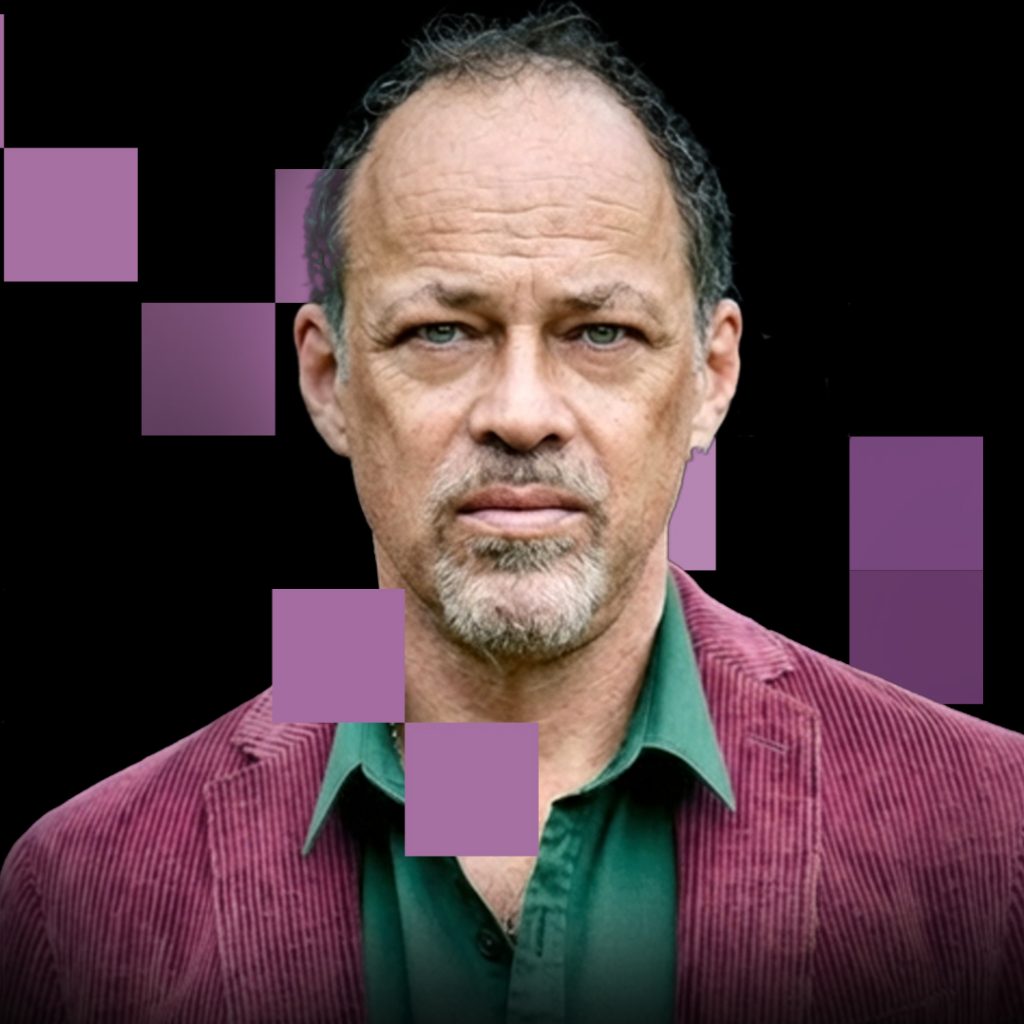
Horacio Alcalá
„It's not about money because every time I do these projects,
I learn something. […] I feel very privileged and I feel like a rich person because I can choose a project where I go,
I travel and enjoy.“


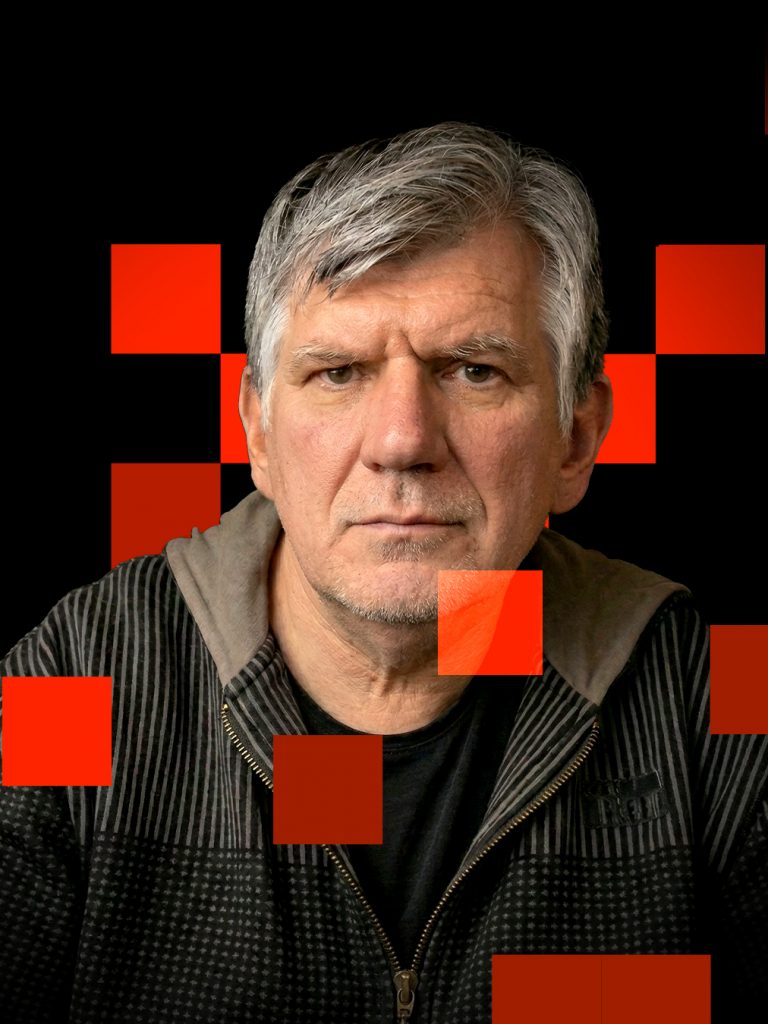
Martina Taubenberger
Seit Anfang 2011 begleitet Martina Taubenberger als selbstständige Kuratorin, Konzeptentwicklerin und Künstlerische Leiterin Projekte in ganz Deutschland und im europäischen Ausland. Im „Blended Art Podcast“ präsentiert Martina Taubenberger Künstler:innen und Projekte, die den Kunstbegriff repräsentieren und reflektiert aus dem Blickwinkel der „blended art“ in unterschiedlichen Formaten über Begrifflichkeiten aus Kunst, Kultur und Gesellschaft.
Horacio Alcalá
Der mexikanische Regisseur und Drehbuchautor Horacio Alcalá ist bekannt für seine bildstarken Erzählungen über das Überleben und die menschliche Erfahrung. Geprägt durch seine Zeit beim Cirque du Soleil, verbindet er in seinen Filmen eine einzigartige Ästhetik mit Themen wie Tanz und Körperlichkeit.
An einem Abend auf meinem Balkon, spreche ich mit Horacio über den Wert von harter Arbeit und Leidenschaft, wir blicken auf unsere langjährige Zusammenarbeit zurück und reden über seine preisgekrönten Filmprojekte. Ein Gespräch über das Wagnis, als unabhängiger Filmemacher alles auf eine Karte zu setzen, die Kraft des magischen Realismus und das Privileg, künstlerische Freiheit über finanziellen Profit zu stellen.
M.T.: Welcome to the Blended Art space. And we’re sitting on my balcony and I’m here with Horacio Alcala. Welcome, Horacio.
H.A.: Wow, I’m so surprised that we talk about it and then finally. Finally, here we are, after Edinburgh.
M.T.: I know. We didn’t meet at Edinburgh. But we’ll come to that point. But first, before we talk about how we met, we have to talk about what we drink. Because you brought a really good wine. What is that?
H.A.: Well, the first wine we had was a Bordeaux. And now this is a Syrah Grenache from the region of, from Languedoc.
M.T.: It’s really good.
H.A.: It’s really good. It’s better than the other one.
M.T.: Yes. We have to admit. We already killed a bottle of wine.
H.A.: Yes.
M.T.: But this is a very…
H.A.: They survived to the stairs.
M.T.: That is a very real situation we’re in here right now. Actually with the second bottle of wine recording a podcast.
H.A.: That’s why we sound so relaxed.
M.T.: Yes, and then you can see how artists can really take a lot of wine in one night.
Talk
M.T.: So, yeah, you’re a filmmaker among others or like filmmaker doesn’t even really cover it?
H.A.: Well, film, I think in this industry, on the filming, you need only 5% talent. The other 95% is hard work. So I’m a hard worker, more than a filmmaker.
M.T.: Oh, I would say so. That is a good one. I like that.
H.A.: Because this is this is how I built my career so far. I learned that you need just a little bit of talent. Of course, if you are a musician, you need, well, you need more talent and a lot of work too. But you need more work than talent in everything you do in general.
M.T.: I like that. So I do the introduction again. I’m sitting here with Horacio Alcala who’s a hard worker. This is so funny,I can totally confirm, I think that you are the hardest working person I know.
H.A.: Well, you are the hardest working person.
M.T.: I’m the hardest working. Okay, this is a good start. So before we go into this competition, who’s the hardest working person, because we have a really funny story how we met each other. Because I’m asking every, every guest I’m asking, how did we actually meet? And we actually tried to talk about this a couple of days ago to other people and it was like an old couple trying to tell the story of how they first met. It’s like, no, no, we met earlier. No, no, no, it was like this.
H.A.: Like, do you remember? And I remembered the metro in London when we were going to the Barbican. And then we talked for the first, I mean, we talked on Skype at the time, I don’t know.
M.T.: Yeah, and you know, you have to say that was 10 years ago. So I think I had to open a Skype account in order to be able to talk to you because nobody used that back then.
H.A.: Dorothee Fischer put us in contact.
M.T.: Yeah.
H.A.: And then I flew to London, we met in London, right?
M.T.: Yes.
H.A.: And then on the metro station, you told me about your marriage and personal things and I thought myself, what am I getting into? I thought, what did I get myself? I was like, why did I? Seriously? And then you said, yes, we are going to Poland. I was like, oh my God.
M.T.: Oh, that you didn’t tell me.
H.A.: No, it’s a joke. No, I thought it’s nice that someone opens up that quickly. And I thought this is going to be nice because it’s not going to be two superficial people talking about, is it going to rain today? Is it going to be cold? You know, talking about the weather. Like we straight, we went straight into the core.
M.T.: We straight went into the core. One has to say, I mean, now this is really getting very personal. But we have to say that the night before I went to London I ended my marriage. So there was no way not talking about it because I was really, I came to London, I was devastated and I thought I’m not going to be able to do this project.
H.A.: And maybe you should say what project it was. It was Szymanowski and Brahms with Valery Gergiev for the London Symphony Orchestra and that was beautiful. Oh, you know what? I just realized we closed a cycle. Because you were devastated when I met you and I was devastated when I came here in February.
M.T.: This year.
H.A.: Yeah.
M.T.: Well. And again, I ended a marriage.
H.A.: And again, you ended the marriage. So we just closed a cycle.
M.T.: We just closed a cycle.
H.A.: So it’s good. No, a new cycle is beginning now.
M.T.: A new cycle is beginning.
H.A.: Yeah, yeah, yeah, a new cycle starts because that’s how it works. And this past cycle, it was very good because I discovered, well, I discovered you, I discovered very good musicians. I discovered the world, basically. After that tour, I used some of the music from Brahms in my film, Grazing the Sky
M.T.: Oh, you did?
H.A.: Yeah.
M.T.: And, didn’t you also use Szymanowski?
H.A.: no, I didn’t use Szymanowski, but I will use Szymanowski in another project.
M.T.: I just used Brahms. That makes me feel very happy. I really contributed something to that beautiful film.
H.A.: Yes.
M.T.: Okay guys, out there, Grazing the Sky is an amazing, an amazing film. So, I think, I think we’re losing people. I think we have to be a bit more structured. Just as an excuse, this is not the red wine, this is us.
H.A.: This is us.
M.T.: This is how we go from one project to the other.
H.A.: How we jump from one project to the other.
M.T.: And I have to say this, this project that we did together there was absolutely nuts, like looking back. It was a, an iPhone application that we developed for the Philharmonie of Luxembourg with the London Symphony Orchestra in collaboration with the Adam Mickiewicz Institute in Warsaw and with Valery Gergiev. And we actually, we cannot mention the budget that we had because nobody would even leave the house for that budget that we had. But we traveled to London and from London to Edinburgh with the orchestra. And then we traveled to Poland, to Warsaw, to the end of the world. And then we traveled to the end of the world, to Zakopane, where this Polish composer was born. And along this this journey alone is like we can talk two hours about that first project.
H.A.: The train journey was amazing. You know what happened in the train from London to Edinburgh? Because you were in a separate wagon.
M.T.: Was I?
H.A.: Yeah, you were in one and I went with another one because they booked for us.
M.T.: Yes.
H.A.: So they put you in one, you were with several musicians. I was, I was in another one with all the musicians and we were talking and suddenly I said, well, today is my birthday. It was my birthday. So they started playing, so they got the violins and they played Happy Birthday on the train, Happy Birthday, and I just, I was floating. It was amazing.
M.T.: I don’t remember that.
H.A.: I didn’t tell you when we got there?
M.T.: You probably did. You probably did.
H.A.: Yeah. Yeah. Yeah.
M.T.: Yeah, that that was, ah gosh, that was such a crazy project. I don’t even know where to start. It started really with this, we met in London and I was, I thought I was not going to be able to do this job and you from the very beginning, I remember you were always so focused and you, we were sitting in this absolutely horrible hotel.
H.A.: The Travelodge.
M.T.: The Travelodge. Never go to Travelodge.
H.A.: In front of the Barbican.
M.T.: Oh Jesus Christ.
H.A.: Our breakfast waiting out of the door in the box.
M.T.: We arrived at that hotel and they said, breakfast, they bring the breakfast to your room in the morning. And I thought, that is weird, that hotel doesn’t look like that kind of hotel. And then it was this box that with, it probably wasn’t even food.
H.A.: It was plastic. British plastic.
M.T.: British plastic. And then you, you basically said to me, hey, we’re going in there tomorrow and we’ll just be professional and we’ll just deliver. And I remember that day we started working together, I was getting better and I realized how much strength and energy I can get out of hard work or basically just the work that we do. And it became such a beautiful project. Although we had almost everything went wrong. I remember we started, we went to the rehearsals for the London Symphony Orchestra and it turned out the orchestra had forgotten.
H.A.: We were not allowed to film.
M.T.: We were not allowed to film.
H.A.: So we became voyeurs. The camera was filming from outside. We were allowed to film but not inside the venue.
M.T.: Yes.
H.A.: So we could film from with an open door. So I was filming through the doors.
M.T.: Exactly, and they, they had, I mean, imagine this, the London Symphony Orchestra paid for our hotels and our travel, but they had forgotten to get us filming permits. Not in the rehearsals and not in Edinburgh during the concerts. And so we, I remember we, we turned this into, into the concept of the whole video.
H.A.: Voyeuristic.
M.T.: Yeah. And you suggested this, , this special aesthetic of a camera that was going slightly in and out of focus, like somebody who’s…
H.A.: And also we were using the clap, remember?
M.T.: Yes.
H.A.: Like they were using the clap themselves.
M.T.: Yes. For the camera. That was fun.
H.A.: We should use that format again.
M.T.: Actually, you know what? Looking back, I still think that this was maybe one of our strongest projects that we did together in terms of this very unique aesthetic.
H.A.: Because we had so much trouble, so we had to be very creative to get out of it, like to solve it.
M.T.: Yeah.
H.A.: Sometimes when everything is so easy that we don’t have to think, but we’re get in trouble and we have to deliver, we have to come with very good ideas.
M.T.: It’s kind of a pity that this iPhone app is not supported anymore. You cannot download it anymore from the app App Store. But we, we have the videos on Vimeo, right?
H.A.: I still have the footage.
M.T.: Yeah, I have it too. I have it too. Yeah, so that was a very interesting first project. And, and we went from there. This has been 10 years. And, Horacio has documented almost every project that I did.
H.A.: Zweimal Elbphilharmonie in Hamburg. Ja, Tonspuren in Irsee.
M.T.: Tonspuren. That was amazing. Yeah. Before we come to the artistic projects that you do as a director and filmmaker and hard worker and…
H.A.: And Shaman.
M.T.: And what?
H.A.: Shaman.
M.T.: Shaman?
H.A.: Yes.
M.T.: That…
H.A.: In the family, my cousin and my mother, they are shamans. That means they use plants to heal people.
M.T.: Ah, okay. I didn’t know that.
H.A.: Yeah. So my cousin travels all around the world using plants to heal.
M.T.: You never used a plant to heal me?
H.A.: Wel, we can anytime.
M.T.: You can heal me?
H.A.: Not heal you, but I can help you to heal yourself because I don’t heal anybody. Everybody heals themselves.
M.T.: Okay, I’m just realizing that’s going to be the next cycle we’re going into., but let’s get back to, because I think the story how you actually became who you are or how you got into film is also very, a very special story. You didn’t actually be that boy who dreamt of being a filmmaker, right? It was more like a coincidence.
H.A.: It was a coincidence. I was a kid and I was going to school and I saw a big queue of kids. Of course they were missing school and I said, I thought I’m going to do the same. So I was queuing and then I realized that the queuing was for a casting for a film. And then I did the casting and I got the part.
M.T.: Oh.
H.A.: I got the part in the film.
M.T.: I didn’t know that.
H.A.: Yes.
M.T.: Accidentally?
H.A.: Basically. Well, accidentally, yeah. And, so the next step was, yeah, I was chosen to do the film and…
M.T.: What, what kind of film was that?
H.A.: It was a film for, for cinema in Mexico. So I’m talking about many years ago. I’m 43.
M.T.: What did you play? What role did you play?
H.A.: I was the son of a rich guy who was kidnapped and the guy had to save me. Of course, it was an action film. And the kidnappers, they forced me to work in the streets to ask for money, pretending to be sick. So my father had to look for me and kill the bastards and save me and all that.
M.T.: Is the film still out there?
H.A.: yeah, the film is still out there.
M.T.: Do you have it? Oh, you have to watch this.
H.A.: In Spanish is called… No, I don’t have it, but I’m sure it’s, it’s somewhere. the film is, is called The White Bird.
M.T.: Okay.
H.A.: And when I was there as an actor, apparently I was a good actor.
M.T.: How old were you?
H.A.: I was eight and my parents allowed me to skip school for three months because the filming was in my town and other places. So I had to follow the crew. And my parents said, okay. So I repeated that year because I missed three months. I didn’t like the acting. What I liked was the other side of the camera. And what happened a year later, I was invited to participate in La Bohème in the second act as a rose seller. You remember the second act of La Bohème? When they are selling roses to Musetta and Mimì? So I was one of the kids. Of course, you didn’t need to sing properly because I was just moving the mouth. And then I discovered the world of…
M.T.: And there was a stage, a stage play that was not a film?
H.A.: No, no, that was a stage play. But I loved the ambience, so I said, I thought, okay, I want to do this. Anyway, I forgot about it because I was a farmer boy. What happened is when I was 19, I had a girlfriend and she one day said, okay, you know what? I want to move to another city to study law. And I was like, oh my God, what, what am I going to do now? So I decided to go to the other city to be with my girlfriend. And I had to made up something. So I lied to my parents and I told them I wanted to do, to study filming because there was only places in that school to study. I didn’t have to apply because they had places. Anyway, so I said I want to study filming and TV, film and TV. So they said yes, they helped me. I moved to the city. I didn’t want to study anything. I just wanted to be with the girlfriend.
M.T.: You know, I have to say that the thought that a woman, a girlfriend, is the initiative or like the initial for you to become a filmmaker is really funny for me right now.
H.A.: Yeah. This is really funny looking back. And it’s, it’s like, it’s a paradox, no? Because I don’t like girls anymore.
M.T.: Yeah. I mean, you like girls.
H.A.: Yes, but…
M.T.: Yeah, but you don’t…
H.A.: Not in that way.
M.T.: Not in that way.
H.A.: Anyway, after some time, she decided she didn’t want to study anymore. She wanted to go back to the small town. And I was like, what do I tell to my parents? They spent such a lot of money. They really spent a lot of money on me going to university.
M.T.: And they never questioned…
M.T.: They never questioned that?
H.A.: Well, I never told to my parents though.
H.A.: So basically she broke up with me.
M.T.: And did they, did they ever, I mean, parents know these kind of things.
H.A.: No, they were asking like, why suddenly you want to go to, why you want to study? Don’t you want to keep milking cows? And it was like, no, I don’t want to milk cows anymore. I want to study.
M.T.: So you had a big farm? Your family had a big farm?
H.A.: My family has, it’s not a big farm, but it’s a farm and I was a…
M.T.: With cows and and animals.
H.A.: With cows and corn, basically. Okay. And I said, no, no, no, I wanna, I wanna study this because I wouldn’t say, I just want to follow the girl, you know? So my parents, they sold cows and land to send me to university because it was a, yeah, a private university.
M.T.: But isn’t it amazing how some things are just random and they turn into a career?
H.A.: And then I said, remember I did that film? So I wanna do that, but it wasn’t true. Anyway, she left and I, and I was not brave enough to tell my parents, look, I just lied because I wanted to be with her. And she broke up. So I said, okay, you know what? I’m going to continue and I’m going to finish at least the first semester. And I finished the…
M.T.: Oh, that’s how fast she broke up?
H.A.: Yeah, like, like, like, within a month.
M.T.: That sucks.
H.A.: Having me there around, so, so she’s like, I think she want, she went to the city to get rid of me and then she couldn’t, so, yeah, she did whatever to get rid of me. Anyway, so I decided to stay six months and I was the best in that semester and I really loved it. So the next semester I said, okay, I’m going to try again and I loved it. So by the end of the career, after four years, I was already doing internship at the national TV and I got hired before I finished school because I really loved it. And then I graduated without doing a, the thesis because my notes were so good that I was accepted.
M.T.: You, you never really like officially finished?
H.A.: No, I finished, but I had, I didn’t have to do a thesis.
M.T.: A thesis? Why not?
M.T.: But that’s weird.
H.A.: No, because it’s called honoris causa.
H.A.: Ah. Because my notes were the highest.
M.T.: I’m, I’m amazed.
H.A.: Because everything I did…
H.A.: Yeah, yeah, yeah, yeah. I got honoris causa for my university. Like highest notes. Like, highest highest, 10, 10, 10, 10, 10, because the highest is 10. So I was, I had 10. Like nobody in the history of that faculty had so many good notes.
M.T.: What do you think where this came from? I mean, is this really sheer talent or is this, what where did it, where this came from?
H.A.: No, it’s not talent. It’s passion. That’s it.
M.T.: And you discovered that passion and…
H.A.: I discovered the passion when I was a kid, but I never trusted myself being a farmer child that would accomplish that because it was so far from me. And I was forced to do it.
M.T.: Did you ever go back to that woman and tell her, thank you for giving this to me?
H.A.: Well, the thing is, I saw her 10 years ago on a restaurant. I didn’t recognize her because she didn’t look as pretty as she was and she was like, hey, it’s me, do you remember me? It was like, no, I don’t remember you. It’s like, yes, we were dating together. I thought like, I don’t think so. And then she left and I was, and then my sister, hey, she’s your ex girlfriend. Remember you went to university because of her. And I was like, oh, she, she changed completely.
M.T.: So you missed the chance to thank her for…
H.A.: I missed the, I thank her anyways, because…
M.T.: That’s stupid, yeah.
H.A.: But actually I have to thank my my parents because they really did a big…
M.T.: And yourself, obviously.
H.A.: And and yeah, and myself, but they really did a economical effort to, help.
M.T.: Wow. So they really believed in you.
H.A.: They really believed. I said that and they thought, okay, it’s a farmer boy that wants to do something. Let’s give it a try.
M.T.: We have to mention how many brothers and sisters do you have?
H.A.: Yeah, I have nine sisters, four brothers, and my older brother is adopted, so we are 15.
M.T.: Jeez, your mother. I mean, I have, I delivered two kids. My body delivered two kids. I have no idea how she, how she does that.
M.T.: I met her once in Berlin.
H.A.: Oh, yes, yes. Amazing woman.
H.A.: Amazing woman.
M.T.: Yeah. Wow. And what, what did your brothers and sisters go for?
H.A.: Well, I don’t talk to my, to my brothers. They are homophobic. So I decided not to have a relation anymore. And with my sisters, all good. We, it’s like a nice family, but I just see one part of the family. I see my parents, my sister, and their kids and the other side, we don’t have, it’s been 20 years since we don’t talk.
M.T.: So you don’t ever go for Christmas or anything where everybody is there?
H.A.: We’re going for Christmas, but they are not invited.
M.T.: So when you come, they are not invited?
H.A.: Yeah.
M.T.: Wow. And but your parents?
H.A.: Because we don’t want conflicts.
M.T.: Your parents are fine with that?
H.A.: No, my parents, they prefer I go. Because they’re not educated people anyways.
M.T.: What do you mean, they prefer you go?
H.A.: They wouldn’t, they would, I mean, they are like very rough people, you know, and the homophobic just making comments and so on and we wouldn’t be…
M.T.: Your parents?
H.A.: No, my brothers.
M.T.: Your brothers.
H.A.: My my parents are perfectly fine. So if I go, they, they just, they don’t get invited.
M.T.: Wow.
H.A.: That’s how it works. Thanks. Anyway, I arrived to Madrid and I did my family because I have my friends and I have friends around the world.
M.T.: So how did you get to Madrid? You now you are where? Like you studied in…
H.A.: And so what happened is, I went to Berlin, I was studying in Berlin then I didn’t have any money. I wanted to do a master in cinematography. So I was working and I found a job at a company, Canadian company called Cirque du Soleil. Which is very well known.
M.T.: Which is very well known.
H.A.: I remember that. Yeah. So in order to pay my school, I had to work.
M.T.: So you went to, you went to master, you did your master in Berlin?
H.A.: I did my, in the end, I didn’t get to Berlin. but I went to Venice.
M.T.: You studied in Venice?
H.A.: It’s a film school in Venice. I I did my master in filming.
M.T.: Do you speak Italian also?
H.A.: Yes.
M.T.: Okay, I have to say Horacio speaks fluent German.
H.A.: Well,
M.T.: Well, you speak German, you speak French, you speak Spanish, you speak English. I didn’t know you also speak Italian.
H.A.: I studied… Yeah, I lived in Italy. I studied in Venice.
M.T.: All right.
H.A.: Yeah. I did my school there. And then when I, first I had to work for Cirque.
M.T.: We have known each other for 10 years and I didn’t know that.
H.A.: Well.
M.T.: Well, okay, keep going.
H.A.: And,I was supposed to work with Cirque du Soleil for six months, but I loved it and it was a very interesting job. That was my school. I learned more at circus than anything else.
M.T.: But what did you do there?
H.A.: I started as assistant of the assistant of the assistant for coffee and copies. No, literally, like a super basic.
M.T.: I think we’re getting to the hard work apart now.
H.A.: And then I was just going farther and farther and farther and until I was responsible for the whole production. So they were sending me the new shows from the headquarters in Montreal and I was taking care of everything.
M.T.: I have to say, I remember when we met, you were still working for the Cirque du Soleil, you brought us into a show once in Berlin and I remember he was the only foreigner who knew the term fliegende Bauten. I will never forget that. Spanrohr. I was with Horacio in his, I think you had an apartment there in Berlin. And he was talking to the city of Berlin to to figure out some some administrative stuff. And I heard him speak German and he would use all these words that I had never heard about. Fliegende Bauten, yes, and I’m referring to this Genehmigung für fliegende Bauten, yes. That was so hilarious. I thought this guy is amazing.
H.A.: Was so technical stuff.
M.T.: Stahlrohr.
H.A.: So I was in charge of inviting the mayor of Berlin and getting the water permit, the police and everything for for the show. So I had a big position. But at some point I had to leave because circus is like a good mafia. Once you get in, you don’t go out. But I’m still in contact with them and that’s why I did this documentary, Grazing the Sky, and that’s why they allowed me to get into the backstage because nobody’s allowed to get that close to the backstage and that’s the most important or the the better part of this documentary.
M.T.: Do you think that this, I know that you are very good at filming dance and all kind of like body work. I think that I, I got in touch with this contemporary circus genre through you. And through Grazing the Sky, through that movie, because that was so beautiful. Like I had never seen anything like that before. And would you say that this has influenced your aesthetic as a filmmaker?
H.A.: Yes, because I, I would spend 10 hours sitting with the creative directors and the the artists putting together the things. So I really lived the process of creating and how to see it from different point of views. And I don’t think a lot of people had had access like this. So imagine for me living this experience and then doing film. So I can mix two things, the aesthetics of the shows and the filming. And that’s why now I’m getting offers from companies like National Dance Company of Spain because they see that I can really see the, I can really focus on the body and I know how to film.
M.T.: And, I mean, looking at your biography and how you, now you’re in, now you’re you were working for Cirque du Soleil, which could easily have been something where you’re stuck, you know? But you still, your career was something else. Like your wish was something else. How did you get there? I mean, you pretty, pretty soon started your own company, right?
H.A.: I started, yeah, after working for Cirque du Soleil, I started my own company because I decided I wanted to do different things. And also I wanted to do fiction. And to do fiction, nobody would trust me. So I had to produce my own film in order to show what I can do.
M.T.: And that’s so brave and so risky, isn’t it?
H.A.: So, I can tell you so far, I don’t own a house, I don’t own a bicycle. I only own a dog, but actually I think the dog owns me. So I don’t have anything physical because everything I have, I have put it on my projects. And so far, like this new film Finlandia about the third gender in Mexico, has brought me so far, like I got the Golden Award in Seattle for best directors. But big directors have this, this award. So suddenly I am sharing this, this award with big directors like Isabelle Huppert or Danny Boyle.
M.T.: But before we get to that project, oh that’s not even a project, this, this like movie, II still don’t really understand, you were really young and you did not come from a wealthy background. How did you even get into understanding that film business world? Because I remember when I met you, you already knew it all. You knew about the film festivals, about the film markets on the festivals. You knew who to talk to and how to present your films. You were selling licenses of Grazing the Sky to different TV companies all over the world. So to me, this seemed like, I mean, I’m doing big projects, but it’s not like I’m taking all the risk myself and I had at the same time had to figure out a whole business. How did you learn that? I mean, where did you, where did you get that courage from to actually?
H.A.: From doing mistakes, from falling. At some point I lost a lot of money and I had debts and I had to work very hard to pay the debts because I did a lot of mistakes. And I learned from those mistakes. So basically I was not having holidays for five years and instead of having holidays, I would book, a badge, an entrance to a film festival to go and see how it works and meeting people and learning from mistakes.
M.T.: And did you have some mentor or something?
H.A.: No, my mentor was my mistakes and meeting the wrong people all the time. And they were just stealing things or projects or licenses or money or ideas or whatever.
M.T.: So you really learned from bad experiences. You didn’t really, you didn’t have people helping you in this business.
H.A.: No. Not, not at the beginning. Now some people is approaching and I know, I smell the people what they want and I’m choosing the right ones. And it’s getting better.
M.T.: And do you turn this experience like, do you help young filmmakers?
H.A.: Yes, now I’m doing it. Yeah. Now I, I do help. I mean, you, you’re really not, you’re just in a position probably that you can help because you…
H.A.: No, now I’m in the position that I can help because I have, because I learned a lot of things. I’m not a famous director.
M.T.: And I don’t know… And did you ever think about quitting? I mean, when you lost all that money…
H.A.: Oh, everything. I quit, I quit every day, mostly. Yeah, I quit all the time. And I say, you know, whatever, I’m going to use the money I make doing videos for other clients and just enjoy life. And after 10 minutes, it’s like, I like this idea. I want to do it and I forget about the quitting. So it’s…
M.T.: So you have some kind of like dementia, like, quit dementia.
H.A.: Yeah, but I quit all the time. Yeah. And I come back.
M.T.: Yeah, maybe that’s also something that we have to mention, you’re not only working on one movie at a time, you actually do, I don’t know how many, how many documentary projects for clients…
H.A.: At the moment, I’m working on two series, but that is taking a lot, like that would, will take me…
M.T.: TV series?
H.A.: The like, platform series, like for Netflix or those. So I’m doing the develop, the development with some Finnish creators and and a Finnish production company. And also I’m doing an art series that I’m presenting to Mark KTV that I told you about before. I have five projects on the go because the film projects they take years to get to some point and you cannot have one.
M.T.: And then you have clients like me…
H.A.: And then I have clients like you that I enjoy the work because…
M.T.: That badly paying, poorly paying…
H.A.: It’s the, it’s not everything, everything is not, it’s not about money anymore. It’s not about money because every time I do these projects, I, I learn something. For example, I discovered already before because you have used Trondheim Voices, but on Saturday I was listening to the voices and I said, hm, this can fit in my next film.
M.T.: , oh they will love that.
H.A.: And I discovered them just through you. Otherwise it wouldn’t be…
M.T.: That makes me so proud.
H.A.: Yes. No, it’s true. So everywhere you know…
M.T.: That this is what really fulfills me when I bring artists together that go on doing projects together.
H.A.: And this is, this is what your projects go about. Your projects are about putting artists together and coming with a solution for something. Like finding a solution for a parking lot.
M.T.: Yeah, we did a project at a garage. Yeah. That we will talk about.
H.A.: Yeah. We will maybe talk about that. Yeah.
M.T.: So, and you also work for European Union and and other customers. So you I mean, this hard working aspect, that is really something. And how many employees do you have?
H.A.: at the moment, I have six.
M.T.: Six employees in Spain.
H.A.: Working in different positions. So I’m in animation, I have a sound technician, I have two editors, you know two of them. Well, you know three of them. But we are seven.
M.T.: It is so amazing. I mean, this is so amazing how you built all that. I mean, you’re my age, I guess. Wow.
H.A.: And now what I manage is that I get to the point where I can leave the projects to them and they solve it without me.
M.T.: Now there’s another thing that I found fascinating from the beginning, although in the beginning I didn’t, I didn’t even know that that was special. Like when I was looking for, for somebody to document that, that project that I had, because I had this concept, this idea and at some point I realized I need somebody who’s filming all this because it turned out the whole app idea and concept was going to be based on film clips. And so I asked around and my, my friend Dorothee, she suggested you. And it turned out that you do everything. You do the filming and the directing and the editing and I mean, we did the editing. And that was also something that I didn’t think was possible. We were filming the day and in the evening in the hotel, we would edit together. And sometimes the next day we would upload the stuff into the app. I remember that. That was so quick.
H.A.: Yeah, but I was doing, working 24 hours a day.
M.T.: We were basically working 24 hours.
H.A.: Like in Tonspuren, remember?
M.T.: Yeah.
H.A.: We would deliver three clips in the night.
M.T.: And I remember that in the beginning, it was only you. You didn’t even bring anybody. You didn’t bring a team. I, sometimes we had an intern who would assist you and just along the way, you would actually train our interns to become filmmakers. You remember Peter? Tonspuren? I think he he became something like a disciple of yours.
H.A.: Yes. And he’s still working for art. He works in a gallery now in Sheffield.
M.T.: Yeah. And, , how, I mean, when you, when you now, you want to do a film clip just something basic, like sometimes when I can’t always fly you in from Madrid when I just need a short clip and the the companies or the the producers or filmmakers that I call, they always say they need three people and they need like such and such many days to film and cut and blah and it gets so expensive and then I realized, gee, Horacio is the one person who does everything. , is this an, this is really unusual or at least now it strikes me as really unusual.
H.A.: No, it is unusual because I started by learning how to edit for my own films because I couldn’t afford other people. So you have to think that I started from very basic and not having any money but I wanted to do things so I had to learn to do everything myself. Like when I met you I was editing at my house.
M.T.: I remember you didn’t have an office.
H.A.: I didn’t have an office. I couldn’t afford it.
M.T.: No.
H.A.: And what, what do you enjoy most? So what would you say, what is your role or your position?
M.T.: My what I enjoy the most is involving my team and make them feel that they are part of the project.
H.A.: Who? Involving your team?
M.T.: My team.
H.A.: Your team. Okay.
M.T.: Yeah, my. I think I’m a a leader in my team. So people respect me and I respect them. And we do things together and I make them feel like they are part of the project. So they do their best to do things.
M.T.: So in in the the movie projects that that you do, you’re not the one with the camera?
H.A.: No. But you’re directing. Like in, in the the movie Finlandia, for example, or the national dance company, I just do the directing. I don’t do anything else. I have a a photography director, three camera operators, editor, I have 42 people.
M.T.: And you know what? In my projects, it’s still you, you know?
H.A.: And in your project I do the work for 42 people. But it’s still nice. It’s completely different, you know. The National Dance Company is an institution and I have my team, but here I discovered other things and I always like coming back to Germany. It brings me the memories from the projects I had before. And for the next 30 years, we will keep working together.
M.T.: Oh, you said that in front, you said that and it’s recorded.
H.A.: Yes, and it’s recorded. It’s like a contract.
M.T.: I have to, I have to say, Horacio has never said no to anything I ask you. You have never said no.
H.A.: Because your projects are not flat. Your projects always involved a challenge. For example, filming in the garage, you know how difficult was for me.
M.T.: Yeah. I thought it was really annoying for you.
H.A.: Oh my god. I was getting crazy. And not only that, the post production is even crazy because the light was so harsh. Or for example, these projects having four colors in one person, you cannot see that in a clip of 15 seconds.
M.T.: No.
H.A.: So it really bring things. And this is a challenge and this is what we want. We just, we don’t want just simple things. But the most interesting things is the mix you do with with the Trondheim Voices, with this composer, with this dancer, in this specific space. Like the project in the, in the Musik in Riesenrad.
M.T.: . That is coming up.
H.A.: Yeah.
M.T.: Yeah, I actually, I thought about…
H.A.: And who does that in the world?
M.T.: Who does that? Yeah.
H.A.: Who does that? So how often do I have the challenge or the opportunity to to work in those projects? And then being so close to the musicians because after that I go and I have drinks with them.
M.T.: .
H.A.: That’s a privilege.
M.T.: Now I can say it, that’s the only reason I do these projects because you have drinks with so many different artists.
H.A.: And they just behave so…
M.T.: Yeah, I know. Amazing.
H.A.: I know. But you know, this is also something that I realized there are some artistic directors I know who manage in every project to put together toxic combinations of artists and we’re not saying names here, but you know who I’m talking about. And then I have the feeling that maybe this is, this is something that I manage quite well. Everybody loves each other usually in these projects.
H.A.: That’s beautiful. And that’s hard too.
M.T.: Yeah.
H.A.: Because the rest, you know, having bad time working is not nice.
M.T.: No.
H.A.: And it shouldn’t be. We don’t get enough money for those projects.
M.T.: No.
H.A.: And whatever they pay, it shouldn’t be like that.
M.T.: Nobody gets rich with from working with me.
H.A.: But we don’t have to be. We don’t have to be rich. I feel very privileged and I feel like a rich person because I can choose a project where I go, I travel and enjoy and not everyone can do that.
M.T.: That’s true.
H.A.: But we have worked very hard for this.
M.T.: I know.
H.A.: Like nothing comes for free.
M.T.: You know that I really appreciate that. Now, we sneaked around talking about Finlandia several times now. Let’s go straight to the project. Tell me about the project.
H.A.: So before the arrival of the Catholics in America, they used to have up to six genders. So imagine you…
M.T.: Six genders?
H.A.: Yes. So imagine you are born and then you decide what to be and you don’t have to be only men and women. You can be some other thing. It’s up to you depending on how you feel emotionally.
M.T.: And how, when was that? When would you decide?
H.A.: That was before, no, I’m talking about the concept, the, the, the the situation. So when the Catholics arrived in America, they said this is not possible, only men and women can exist. So they killed, let’s say they, erased all the genders, but only one place in Mexico survived and they have this third gender. They are called Muxes. So when I knew about them, I decided to do a project.
M.T.: When did you know, when did you get in touch with them?
H.A.: I knew it four years ago and I flew them, I flew there, I met them and I was like, like…
M.T.: But so it’s not a such a, such a well-known thing then, if you discovered that.
H.A.: It’s not such a well-known thing, no. But it’s becoming, through the film.
M.T.: And is it, is it a special region that they live in?
H.A.: It’s in a special region and only one town.
M.T.: Oh, okay.
H.A.: Yeah, it’s only one town. So they are not men, they are not women, they are called Muxes. It’s a third gender and in their language, they have an article for them. Like in Spanish we have masculine and feminine. In German you have neutral. But they have another article for the Muxes. So it’s in the language. Imagine how, how it’s in their culture.
M.T.: And at what age do they decide?
H.A.: Well, anytime when they decide.
M.T.: So you could at any age…
H.A.: At any age they decide that they are not men, not women, they are something else. So they dress, they have a specific way of dressing, of course. And they, they have a very important role in society. Because they work, they have the strength of a man for work, they can do anything, but they have the emotions of a women. So they’re very artistic too, they’re very creative.
M.T.: So that is almost a research project that you did.
H.A.: It is a research.
M.T.: Is there a lot of research about that?
H.A.: It’s, there is a lot of research about that. So I’ve seen a lot of documentaries, a lot of art, read a lot of articles. Of course, you cannot find a common path on it because there is many versions. It’s very difficult to describe them.
M.T.: And what is your angle? What, what makes your documentary…
H.A.: It’s not a documentary, it’s a fiction.
M.T.: Oh, it’s a fiction.
H.A.: It’s a fiction.
M.T.: I haven’t seen it. I have to admit, I haven’t seen it.
H.A.: You can, I can get you a private link and you see it. you have, you need very good sound system because it’s about sound. The film is about sound.
M.T.: How come?
H.A.: The film has seven layers. It’s seven different stories. One story is only sounds. You can hear it and it’s one story. You can see it without sounds, it’s another story. And then there is the architecture and then there is, yeah.
M.T.: That was all your idea?
H.A.: Yeah, that was all my idea. My idea was to structure all this. There is a lot of silence in the film and there is of course, there is a special score music in the film, but there is also Wagner and Mahler mixed.
M.T.: Now I feel like we have to pause this and I have to watch the movie before before we keep talking.
H.A.: Yeah.
M.T.: But I mean at the same time I’m in the same situation probably people out there are, they haven’t seen the film but that really sounds like you definitely have to see it.
H.A.: So the film has been in more than 30 international film festivals.
M.T.: I mean it’s, it’s the time for this kind of movie.
H.A.: It’s the time for this.
M.T.: I remember when you told me about that, I mean you’ve, , this has been in your head and in your heart for a long time. I remember that we talked about it sometime ago. This whole gender discussion was not that out there yet.
H.A.: And but now is en vogue.
M.T.: Now it’s everywhere. So it’s almost like you were, you were, , leading the…
H.A.: The…
M.T.: The times, you know, leading.
H.A.: They are not known but thanks to the film people start talking about them everywhere from Sydney, Australia to Canada.
M.T.: Wow. Because people see them the film and then they think, are they real? And they go, they look in internet and now they are contacting them to do research and…
M.T.: But that means that you also wrote a narrative about a fictional character?
H.A.: Yeah, yeah. They are invented, they are made up.
M.T.: Okay, and you, you casted Muxes?
H.A.: Yeah, real Muxes and, professional actors. They are mixed, but you don’t know who is who.
M.T.: . So there are male or female actors who play Muxes?
H.A.: Yeah. And there is real Muxes.
M.T.: Why did you do that? Why did you do that? Why didn’t you…?
H.A.: Well, because, , I didn’t want to do it with the Muxes because in the end is cinema. Cinema is magic. And cinema you need the pillars of cinema which is professional technicians and professional actors. And I didn’t want to put in jeopardy the acting. So I wanted to mix them and I really accomplished that you don’t know who is who. You don’t know who is real and who isn’t.
M.T.: And these actors were advised by real Muxes or you or?
H.A.: Yeah, no, yeah, but I mean, we went there, we spent two weeks with them. They learned about the, the talking, the way of moving, the acting, the reasons. And then we worked together, we were rehearsing for two weeks. And the acting is really special. And what is the story?
M.T.: Did you write the script?
H.A.: I, I wrote the script. So it’s a young boy who wants to be a Muxe, but the mother is from another town and she wants him to be a priest. So there is a conflict because he is a third gender, but the mother is very Catholic. The second one who has a father who is abusive. And the third one who is very old Muxe and she has a lover in Finland and all she lives only for the letters she’s getting every two weeks, love letters.
M.T.: That’s why it’s called Finlandia.
H.A.: That’s why it’s called Finlandia. So these three characters together, there is something happening. There is an earthquake. And the earthquake is actually a character because something happened. They go to a wall, it’s like a wall in Jerusalem where they tell their, sorrows, it’s like your little monster, yes, yeah. And they have so, so much sorrows that the the earth decides to respond. And the way of responding is creating an earthquake because it’s been so much pain and the only way to solving things is by having an earthquake, shaking everything to start again. So this is the story about. So it’s basically the communication with the earth, telling your pain and imagine the earth reacting to what you say.
M.T.: Is that a myth? Is that a…
H.A.: Well, you know magical realism? The way of like the literature. So magical realism is when things are, depends on the, on the audience, if they wanted to be real or not. It depends on your imagination. So the earthquake really happened.
M.T.: Yes.
H.A.: But it wasn’t made by the Muxes telling their sorrows to a wall, you know? But it could be, maybe. Why not? If you want to believe it.
M.T.: How do you come up with that?
H.A.: I don’t know. I don’t know. Through listening music, through traveling, through having experience.
M.T.: And when, how long did it take to make that movie?
H.A.: Four years.
M.T.: Four years.
H.A.: Yeah.
M.T.: This projects take a lot of time. From the research, because you don’t do a movie just like this. You do a research, a real research. You go through the funding, and then the filming, and then, COVID, and then post-production, and then…
H.A.: You did all this through COVID?
M.T.: Before, just, yeah, between COVID, like COVID broke up the process.
M.T.: Is this something where you got scared of losing too much money or losing the project at all?
H.A.: I mean, you can lose your money in a day doing anything else. You buy your house, then you leave and then there is a fire and your house gets burned. It could happen.
M.T.: Your attitude is amazing.
H.A.: What?
M.T.: Your attitude is amazing.
H.A.: No, but it’s true. I know, well, you remember my old house in Madrid?
M.T.: Yes.
H.A.: In my street there was…
M.T.: You still live there, don’t you?
H.A.: I moved now, but in this house, in my street, there is prostitutes working.
M.T.: Yeah, my old house. I remember.
H.A.: The oldest prostitute, she was an institution because she has slept with all the politicians possible. Many famous people.
M.T.: You should make a movie about that.
H.A.: And you could make a movie about her. You should make a movie about her. Her stories.
M.T.: You talk, you talked to them on the street?
H.A.: Yeah, I talked to them on the street and they take care of my house. If someone goes to look for me, they they tell me, oh I saw your friend came to look for you but you weren’t there and he left.
M.T.: I remember when I was staying in your house, I had this feeling of, that almost felt like being in a movie. Like these prostitutes on the street, but it was, it was almost like a, like a, like a neighborhood community kind of thing. Yeah.
H.A.: Yeah, it’s a neighborhood. And what, sometimes I had some problems in the street with people wanting to fight and they would come and defend me and, you know, they would help. So we were a community. So this oldest prostitute, she was working as a prostitute just to make money for when she’s old. She was already old, but you know, just to have some, to have some security. So she, I don’t know, she had so many savings from doing her job, but then COVID arrived and she died of COVID.
M.T.: Oh Jesus.
H.A.: Yeah. So where’s the money? Where’s the money gone? Like she was working the whole life to have savings and then she never used them. She never used the money. So what is the point of collecting money if, if it can go, you know, banks can do stuff and your money is never safe. Whatever you do.
M.T.: So you never worry about these things? I mean, these are huge sums we’re talking about in making a movie.
H.A.: Yeah, but what do I do? The other option is not doing the films and just working and just being unhappy. I prefer to lose the money but to be happy than to do the other way around.
M.T.: But now you’re not losing money. You’re actually getting something back.
H.A.: No, I’m in a, I mean, I’m, I’m in a good position. I’m getting back and basically Grazing the Sky paid for Finlandia, you know, and Finlandia now is going to pay for Over the Waves. It’s a project I want to work with Trondheim Voices. I’m writing on the script.
M.T.:That’s your next one.
H.A.: That’s the next film.
M.T.: So basically what you do is you take the money that you make from one movie and right put it into the next one.
H.A.: Yeah.
H.A.: That is something…
M.T.: But the next is getting bigger and bigger.
H.A.: Of course.
M.T.: You know? That is some real serious producing you’re doing there.
H.A.: Yeah. Yeah. And with the other projects like yours, I pay my bills and I survive and I pay my traveling, my holidays, my food, my dog’s food, my dog’s vet.
M.T.: And so these awards you’re winning are directing awards?
H.A.: Some of them are directing, some of them are for best film. Yeah, but the biggest award is the Seattle International Film Festival. Like after that, I was trying to contact film companies, like production companies for 20 years and they would never answer an email or anything. Or in festivals, people would not give me an appointment. After the film, guess what? The same ones are approaching you. What are you doing? I’d like to know what you’re doing. Let’s have a meeting, dah dah dah.
M.T.: How does that feel?
H.A.: Well, it feels like, what if I work very hard and I never get that award? And what if I’m a lazy bastard and I get that award?
M.T.: Yes. You know? So you think there’s no connection?
H.A.: , I don’t know. I mean, I can, I got the award because the film is good, but there were other films that maybe are better. So why I got the award, I will never know. But that award really changed everything.
M.T.: I mean, obviously, you hit a spot, as we said before, it happens that the topic that you have been thinking about and working on for such a long time, suddenly is en vogue. I think probably these are the moments that, that are the game changer, right? In, are you getting the award or is somebody else getting the award? So I see what you’re saying in, in, to a certain extent, it obviously, obviously is the hard work and it obviously is the talent and it is the quality, but there’s this chance thing that always comes with it. Yeah.
H.A.: And I had to wait for 20 years to get to this moment. And now it’s very, it’s not so easy, but it’s easier for me.
M.T.: To get money and funding for your next project.
H.A.: To get money or just I send an email and every institution says yes to anything. Embassies and consulates, whatever. I send an email, oh yes, you are from Finland, yes, whatever you want.
M.T.: But you deserve it. I’m so proud of you.
H.A.: Yeah, well, yeah, yeah.
M.T.: So tell me, tell us about the next project. What’s next?
H.A.: So the next project is about the fragility of people when they go from not having anything and being humble to having money and power. How can they become horrible people?
M.T.: And when they came?
H.A.: Yeah. So it’s about a family that has nothing and from one day to another, they have a lot of money and they become very powerful. They were the nicest people in their community and now they become hell for everyone, abusing.
M.T.: And where are you shooting that?
H.A.: And we are shooting in Madrid and a lake in Mexico also.
M.T.: And does it escalate? Is there a murder going on?
H.A.: They’re going to die. It well, it thinks escalate. There is no, dying. Nobody dies in the film because I don’t, think we need it. But there is a burning. Everything burns in the end. And they go back to zero from where they started.
M.T.: Well, isn’t that kind of like your life philosophy there, right there?
H.A.: Yeah. Yes. So they are working a lot to get something, they get it. They don’t know what to do with that power and that money. And in the end, everything has to burn because it’s not made for them.
M.T.: And you just started that? You’re writing the script right now?
H.A.: No, I’ve been writing the script for two years already. Now I’m working with a professional person who is a professional in scripts and he’s helping me to reconfigure, delete and we do and things to make it more interesting.
M.T.: And say the name again.
H.A.: The name of the person?
M.T.: The title.
H.A.: Ah, the, the title is, is Over the Waves.
M.T.: Working title, Over the Waves.
H.A.: No, it’s the final title.
M.T.: Oh, okay.
H.A.: Yeah, it’s Over the Waves and it’s about the fragility of humans with with those things.
M.T.: Oh, yes.
H.A.: It’s a good thing we never, the two of us will probably never get rich.
M.T.: I don’t, I don’t expect that and, you know, I’m so happy right now with the…
H.A.: I’m the same way. I put all my money into the festival. Nobody knows that I’m not making any money out of this. I’m actually putting money in. I’m not being, I’m not earning any…
M.T.: But will you get something out of it later?
H.A.: No. No, I will not.
M.T.: Really? Like recognition or?
H.A.: Oh, recognition, of course. Yes, of course. I mean, that was a conscious decision. It was a conscious decision. Actually, I had, I did this business coaching a couple of years ago and it was about where to take my business, basically. And it turned out that I was, , that from an economic point of view, all these artistic projects that I do don’t make any sense. Because even if I get paid, the work that you actually put in never gets back. And I was talking with this coach, I was talking about how to make my business, how do you say, like scalable, like how you can put less effort but make more money. And she said to me, listen, these projects are like your, like your, your your stage. That’s your shop window. That is where you show who you are and what you do. And then she said, why don’t you just change the perspective and that is your invest. That is your invest in your business and you might get recognition and then get other contacts or do other things, but that is your thing. And then she said, and if you are responsible for the sponsorship of your projects anyway, you don’t need to wait for anybody to ask you to do these things. You can just do them. And it kind of comes back to a to an exercise you you often do when you start a coaching and you want to learn something about yourself. One of the first questions is if money wouldn’t matter and if you could do whatever you want, what would that be? And I end up with, I would do a festival where I invite people that I want to work with and I commission music that I want to hear and listen to. And then I realized, wait a minute, I’m already doing this.
M.T.: This is happening with me because I’m also doing a coaching and then I realize, oh my God, all I wanted is what I’m doing.
M.T.: Yes.
H.A.: And even if I was the richest person, I would do this. I would do my films.
M.T.: I know. I know. And then when the next question comes, if you would win a million in a lottery, or two million or 10 million and what would you do? And no, you have donated already, you have taken care of your family, you have bought a house, you have paid your debts. What would you do with the rest of million that is still there? And I realized I would do a festival. I would totally put everything into the arts and not worry. I would actually, you know what I would do? I would try if you have a lot of money and you can really spend money on marketing, on like really putting it out there because I think you can sell a dog shed if you have enough money and people will line up in front of the dog shed to hear the dog park. That is my theory about how marketing works. It is just about having enough money to do a campaign and that is the money I never had. So obviously I would put all that money into the arts and into promoting the arts. And then I realized, okay, I am already there. I’m really, really happy. The only thing is that it takes longer to get it out there and to get like the public, you know, I get the recognition. I, I get the recognition from the press and from the arts and from everybody. It’s just not the audience is not lining up yet. And then I realize, you know what? I don’t care. And this is the difference. Some people get depressed when their tickets sold, I don’t care because when I sit in the premiere, like we did last weekend and there were really not many people, but it’s just, it feels like I did this for myself. You know, I did this for myself and for the artists and for the people who are sitting there. And that is really, really, really, that’s a huge gift, isn’t it? To be able to do… Yeah.
H.A.: But it took a lot of work to get there. It wasn’t easy. It’s been years and years. And you know, what is the percentage of people that can say that? 0000 like 00001.
M.T.: Yeah. Because even millionaires can’t do what they want. And you know what? And they might not have the ideas or they might also not have the courage. Yeah. I mean, as soon as you are and maybe this is the point, as soon as you worry about losing money, you’re not free anymore. Because you’re afraid of Yeah. Not because you want to keep being richer. You want to keep more and more and more and more and more and more and more. So we live better than billionaires.
M.T.: Absolutely.
H.A.: I think so.
M.T.: No, it’s true. Let’s drink to being, let’s drink to living better than all the billionaires out there. But I mean, all the billionaires listening to this podcast right now, we would take your money. We have a lot of ideas.
H.A.: And what you are hearing is the pouring of the red wine on the glasses. Ah, and it’s such a good red wine. And this is actually, I have to say, this is such a beautiful night on my balcony.
M.T.: Yeah, such a quiet night.
H.A.: Under the, under the sky. So let’s, let’s drink to this. Let’s drink to not needing money but being happy. And having ideas to use it properly if we had it. And it happens to you too that you have an idea and you know you can do it no matter…
M.T.: And you always find people who trust you. I also have to say that. I actually told the whole story about the festival and how about everything that I’m doing is coming along and he said, are you actually aware of how lucky you are and how few people have that possibility, that possibility and get that kind of money in their hands. And then I’m realizing, yes, somehow I found somebody or some institution that trusted me enough to give me just enough money to do what I’m doing. And I think this is not only luck, it’s also knowing what you’re doing. And it doesn’t matter how much money you give me, I will always spend all of it on the arts. I want keep it. I will do the best.
H.A.: And I will take, I will get the best out of it. Yeah. But is anybody else doing the kind of projects you are doing in Germany? Because I’m telling in, in Spain, nobody does this kind of projects.
M.T.: I don’t know. I guess there are people like me, yes.
H.A.: Where? To do a project like that?
M.T.: Do you know somebody?
H.A.: I never…
M.T.: I mean…
H.A.: I don’t know anybody. I mean, like so challenging, like I’m going to bring someone from Norway and this from here and this from there and put them there and let’s see what comes. I don’t know. I don’t, I don’t think so.
M.T.: It’s good that you know some, nobody else because then you will always be working with me. So again, let’s drink to us and to this beautiful friendship that we have with these amazing stories and we didn’t even tell the two person, we haven’t gotten into the story of strawberry apple.
H.A.: No, but we have to tell the story of strawberry apple.
M.T.: Strawberry apple.
H.A.: Once upon a time in Edinburgh, after not being able to film the London Symphony Orchestra, only from the backstage, and having the most hilarious interviews with Valery Gergiev, yes. If you want to talk about the music, if you really want to know the music, you have to know it. And then it’s like, what happened? And we were sitting there like, yes, he’s right.
M.T.: That’s very, that’s very deep.
H.A.: What that means? He’s deep.
M.T.: It’s like, he sounds like a conductor. Okay, but that was not the story you wanted to tell.
H.A.: You go with the story.
M.T.: Strawberry apple.
H.A.: Yeah. So we went to a bar with all the musicians. The bar was called Shakespeare.
M.T.: No, the Shakespeareans. Yes. The Shakespeareans. So we get there and you continue.
H.A.: Okay, so there was this fridge behind that barkeeper, that old barkeeper and there was, , a drink that looked rather interesting. It was like red. And we said, sir, what is that? And he said,
M.T.: I took a bottle and I showed it.
H.A.: What is that? And the barkeeper said, that’s strawberry apple. And he said, oh okay, but what is it? I mean, is it lemonade?
M.T.: Strawberry apple.
H.A.: Yeah, yeah, but does it have alcohol or is it a juice?
M.T.: Strawberry apple. And he was getting really annoyed. And he said, I get a strawberry apple. And then, , we already started laughing and then I said, okay, I’ll have one.
H.A.: Let’s open and try.
M.T.: And I opened it and tried and then Horacio said, so what it tastes like?
H.A.: What is it?
M.T.: And I said, it’s strawberry apple.
H.A.: And it was true. It was just, it was, it was, it was. And now he understood why. Oh God, we’ve had, we told the story like 100 times and I, whatever, I tell you.
M.T.: It’s so funny.
H.A.: I mean, looking at his face like, yes, why, why don’t you understand? This is strawberry apple. I give up, it’s strawberry apple.
M.T.: We will have to do a production.
H.A.: It’s called Strawberry Apple.
M.T.: One day and it has to be pronounced like that. That, that we have to be really careful about, it’s strawberry apple. Okay, ah gosh, that was a wonderful session. , thank you Horacio. There’s one last thing that I ask my guests that are not German or English native speakers and that is, , how would you say goodbye to our audience in your mother tongue?
H.A.: Lo he pasado muy bien, ha sido una experiencia muy bonita y estoy muy agradecido de estar aquí esta noche en este podcast.
M.T.: Dem ist nichts hinzuzufügen. Auf Wiederhören.
H.A.: Auf Wiederhören.